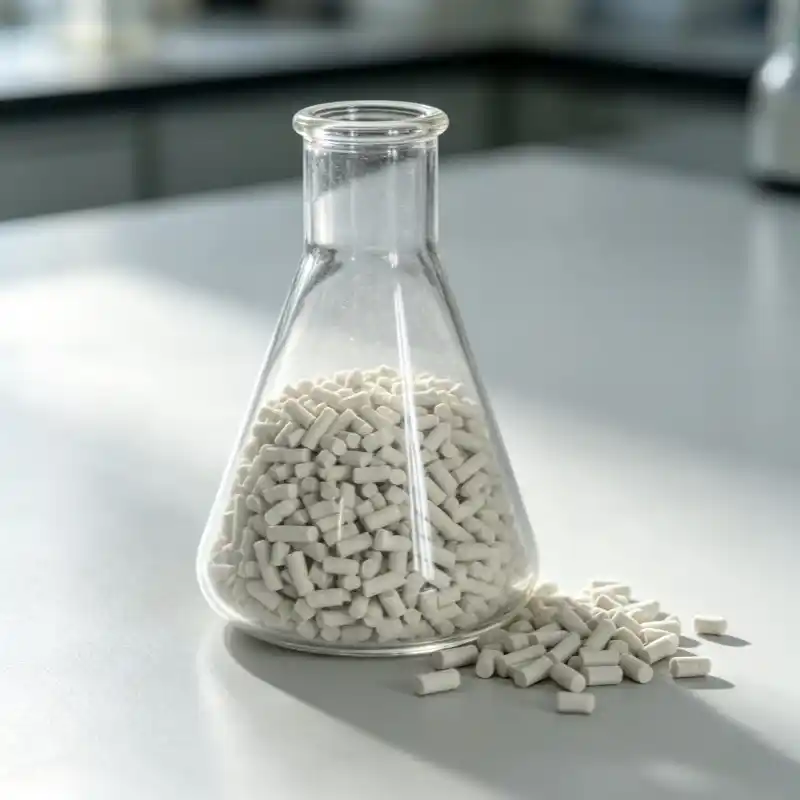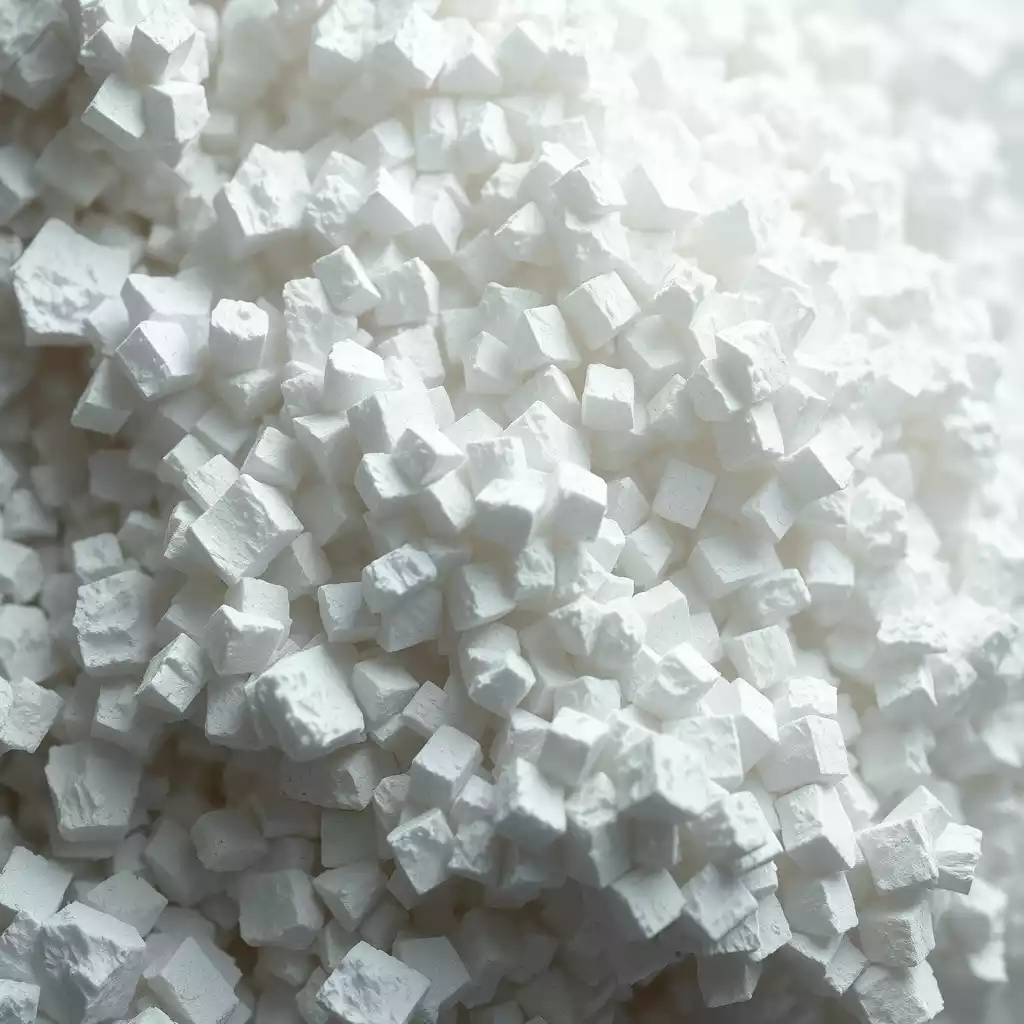


White Fused Alumina for Precision Grinding and Surface Finishing Applications

Precision grinding is not only about removing material. The real challenge is controlling the cut without causing grinding burn, random scratches, excessive wheel wear, or dimensional errors.
That is where white fused alumina comes in.
Also known as white corundum or white aluminum oxide, this high-purity abrasive combines strong cutting ability with controlled grain sizing. It is widely used in grinding wheels, coated abrasives, lapping compounds, polishing systems, and surface preparation.
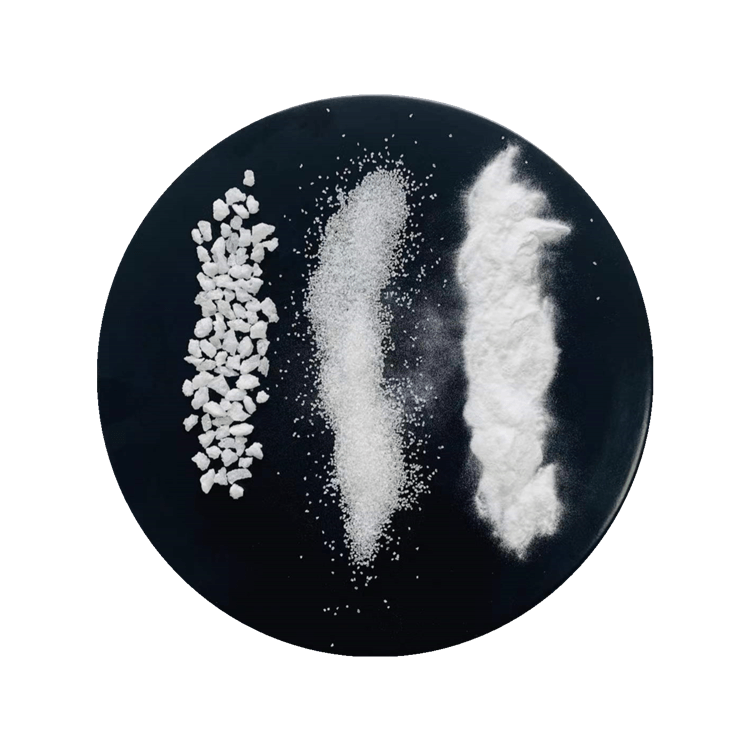
HONREL White Fused Alumina is produced from high-grade Bayer alumina through electrofusion at temperatures above 2,000°C. The product is available in coarse grains and precision-classified micropowders for different stock removal and finishing requirements.
Table of Contents
What Is White Fused Alumina?
White fused alumina, commonly shortened to WFA, is an electro-fused aluminum oxide abrasive. Its main crystalline phase is α-Al₂O₃.
The material has a true density of at least 3.90 g/cm³ and a hardness of approximately 2,200–2,300 kg/mm². Its high hardness gives it the cutting strength needed for grinding, while controlled grain shape and particle size help maintain a consistent finish.
HONREL’s low-sodium, high-purity grades can reach more than 99.9% Al₂O₃ in selected particle sizes. Low levels of iron oxide, silica, and sodium oxide help reduce unwanted contamination during precision processing.
| Property | HONREL specification |
|---|---|
| Basic mineral | α-Al₂O₃ |
| Production method | Electrofusion above 2,000°C |
| Crystal size | 600–1,400 μm |
| True density | ≥3.90 g/cm³ |
| Hardness | 2,200–2,300 kg/mm² |
| Available sizes | F4–F220 grains and fine micropowders |
| Selected Al₂O₃ purity | Above 99.9% |
Corundum has a Mohs hardness of 9, which explains why aluminum oxide is widely used in abrasives and cutting tools. However, hardness alone does not determine grinding performance. Grain geometry, size distribution, bonding system, pressure, and wheel speed all affect the result.
Why WFA Works in Precision Grinding
Abrasive grains must cut efficiently while keeping heat input and scratch depth under control. White fused aluminum oxide provides several practical benefits for this job.
Controlled cutting action
The angular grains create defined cutting points that remove material instead of simply rubbing against the surface. This helps reduce loading and unnecessary heat when the abrasive grade and operating conditions are properly matched.
High chemical purity
Unwanted metallic contamination can be a concern when grinding stainless steel, precision parts, coated components, and other sensitive surfaces. High-purity white corundum contains very low levels of iron-bearing impurities.
HONREL test results for selected F80–F180 grades show Al₂O₃ contents from 99.920% to 99.960%, with Fe₂O₃ values between 0.010% and 0.024%.
Consistent particle distribution
A few oversized particles can leave deep scratches across an otherwise acceptable surface. This is one of the most common causes of rejected parts in lapping and fine finishing.
HONREL controls the coarse fraction, basic grain, mixed fraction, and fine fraction in its F4–F220 products. Micropowder grades are classified by maximum diameter, average diameter, and fine-particle distribution.
Wide grit range
Coarse particles provide faster stock removal. Fine powders produce shallower cutting marks and a smoother finish. HONREL supplies both ends of the range, allowing processors to use staged grinding instead of trying to achieve the final surface in one pass.
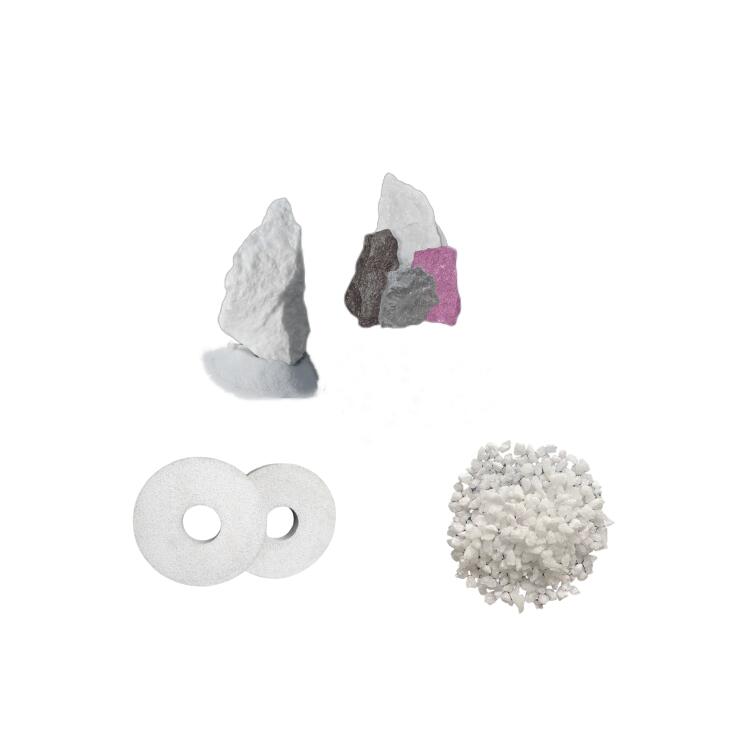
1. Precision Grinding Wheels
White fused alumina is commonly used in vitrified and resin-bonded grinding wheels. It is suitable for operations that require controlled cutting, dimensional accuracy, and a clean ground surface.
Typical uses include:
- Tool grinding
- Surface grinding
- Cylindrical grinding
- Internal grinding
- Precision component finishing
- Sharpening operations
In production, the abrasive must work with the wheel bond rather than against it. If grains are held too firmly, they may become dull and generate heat. If the bond releases them too quickly, wheel consumption increases.
Grain size, concentration, wheel structure, dressing interval, coolant flow, and peripheral speed should therefore be evaluated together.
2. Coated Abrasives
White aluminum oxide is also used in sanding belts, abrasive paper, discs, and other coated products.
Angular grains provide an active initial cut, while closely controlled sizing helps maintain a more even scratch pattern. This matters during multistage finishing because deep scratches from an earlier step may remain visible after finer sanding.
Common coated abrasive uses include:
- Stainless steel finishing
- Precision metal sanding
- Wood coating preparation
- Paint and coating removal
- Deburring
- Surface blending
For coated abrasives, the backing, adhesive system, grain orientation, and coating density can be just as important as the abrasive itself.
3. Lapping Precision Components
Lapping requires a controlled abrasive slurry or compound to correct flatness, improve contact surfaces, and remove very small amounts of material.
White fused alumina micropowder is used where repeatable particle distribution is important. A tight top cut helps lower the risk of isolated deep scratches, while a stable average particle size supports a predictable removal rate.
Potential components include:
- Mechanical seals
- Valve parts
- Precision bearings
- Optical and electronic components
- Ceramic parts
- Measuring surfaces
For demanding lapping lines, nominal grit size is not enough. Buyers should also review the maximum particle diameter, median size, coarse tail, and batch-to-batch consistency.
4. Fine Polishing and Pre-Polishing
Fine WFA powders can be used during polishing or as a preparation stage before the final polish.
The purpose is usually to remove grinding marks and create a uniform surface for the next compound. If the grade is too coarse, the process leaves persistent scratches. If it is too fine, cycle time increases because the powder cannot remove the previous marks efficiently.
HONREL supplies precision grinding micropowders from #240 to #8000.
| Micropowder grade | Average diameter |
|---|---|
| #240 | 57.0 ± 3.0 μm |
| #400 | 30.0 ± 2.0 μm |
| #600 | 20.0 ± 1.5 μm |
| #1000 | 11.5 ± 1.0 μm |
| #2000 | 6.7 ± 0.6 μm |
| #3000 | 4.0 ± 0.5 μm |
| #4000 | 3.0 ± 0.4 μm |
| #8000 | 1.2 ± 0.3 μm |
A finer number does not automatically guarantee a particular Ra value. The final roughness also depends on workpiece hardness, abrasive concentration, pressure, dwell time, machine condition, lubricant, and the surface left by the previous step.
5. Abrasive Blasting and Surface Preparation
White fused alumina can be used as blasting media when a clean, sharply cut surface profile is required.
Typical duties include:
- Cleaning precision metal parts
- Removing surface scale or oxidation
- Preparing components before coating
- Creating a controlled matte finish
- Cleaning molds and tooling
- Surface roughening before bonding
Blasting performance depends on grit size, air pressure, nozzle distance, impact angle, media circulation, and separator efficiency. Excessive pressure may increase media breakdown and produce an uneven profile, while worn or contaminated media can reduce finishing consistency.
High-purity WFA is particularly useful where contamination from the blasting media must be kept low.
6. Refractory and Technical Ceramic Finishing
White corundum can grind and finish hard mineral-based materials, including technical ceramics and refractory components.
Its hardness allows it to cut surfaces that are difficult to process with softer abrasives. Fine grades can support edge finishing, dimensional correction, and surface preparation before coating or assembly.
The selected abrasive should match the component’s hardness and fracture behavior. An overly aggressive setup may cause edge chipping or subsurface damage, especially on brittle parts.
HONREL supplies WFA as part of its broader range of abrasive and refractory materials for industrial processing.
Selecting the Right WFA Grit
The grit should be chosen around the required stock removal rate and final surface condition.
| Processing stage | Suggested starting range | Main objective |
|---|---|---|
| Heavy stock removal | F24–F46 | Fast cutting and surface correction |
| General grinding | F54–F80 | Balanced removal and finish |
| Precision grinding | F90–F220 | Reduced scratch depth and tighter control |
| Lapping and pre-polishing | #240–#1000 | Flatness and uniform surface refinement |
| Fine finishing | #1200–#4000 | Removal of fine grinding marks |
| Very fine polishing stage | #6000–#8000 | Low scratch depth and refined surfaces |
These ranges are starting points rather than fixed process rules. Trial runs should confirm the correct grade, especially when the workpiece has strict roughness or dimensional tolerances.
The Federation of European Producers of Abrasives also distinguishes between F-grits for bonded abrasives and P-grits for coated products. A grit number represents a controlled size distribution—not a single particle diameter.
Common Surface-Finishing Problems
Random deep scratches
Likely causes include oversized grains, contaminated slurry, dirty equipment, poor filtration, or abrasive carryover from an earlier step.
The practical fix is to check the top cut, clean the system, improve slurry filtration, and prevent coarse particles from entering the fine-finishing stage.
Grinding burn
Burn marks may result from excessive pressure, dull abrasive grains, insufficient coolant, poor wheel dressing, or incorrect speed.
Switching to a finer grade alone may not solve the issue. The full grinding window needs to be reviewed.
Inconsistent surface roughness
Variation between batches can come from unstable particle distribution, changing abrasive concentration, worn equipment, or inconsistent process pressure.
Stable abrasive sizing is essential, but the operating parameters must also be kept within a defined range.
Low removal rate
Abrasive grains may be too fine, the applied pressure may be too low, or the wheel may be loaded. In lapping, an incorrect slurry concentration can also reduce cutting efficiency.
Excessive abrasive consumption
Rapid consumption may point to the wrong bond system, excessive blasting pressure, weak grain retention, or poor media recovery.
White Fused Alumina Quality Control
For precision work, purchasing decisions should go beyond the basic Al₂O₃ percentage.
Important inspection items include:
- Chemical composition
- Sodium oxide content
- Iron oxide content
- Grain-size distribution
- Oversized particle control
- Bulk density
- Crystal structure
- Magnetic contamination
- Lot consistency
- Moisture and packaging condition
HONREL supplies coarse WFA grains according to GB/T 2481-1998 size-composition requirements and provides detailed particle-distribution data for precision grinding micropowders.
Selected high-purity grades show:
| Grade | Al₂O₃ | SiO₂ | Fe₂O₃ | Na₂O |
|---|---|---|---|---|
| F80 | 99.960% | 0.021% | 0.010% | 0.009% |
| F100 | 99.930% | 0.028% | 0.016% | 0.026% |
| F120 | 99.922% | 0.027% | 0.024% | 0.027% |
| F180 | 99.920% | 0.029% | 0.022% | 0.029% |
Actual specifications should be confirmed by grade and production batch.
White Fused Alumina from HONREL
HONREL White Fused Alumina manufactures and supplies low-sodium, high-purity white fused alumina for grinding, coated abrasives, lapping, polishing, blasting, refractory production, and technical ceramic processing.
Available options include coarse F-grits and precision-classified micropowders. HONREL can support customers with particle-size selection, chemical composition data, bulk-density information, and product test reports.
You can view the product range or contact our team with your required grit, workpiece material, processing method, and target surface finish.