
6 Applications of Chromium Corundum

Chromium corundum is used when an abrasive needs the hardness of fused alumina but more grain toughness than white corundum can provide.
That difference matters in precision grinding, abrasive-tool production and high-temperature refractory work. A tougher grain breaks down more slowly, which can improve grain retention and surface finish when ordinary white fused alumina is too friable for the job.
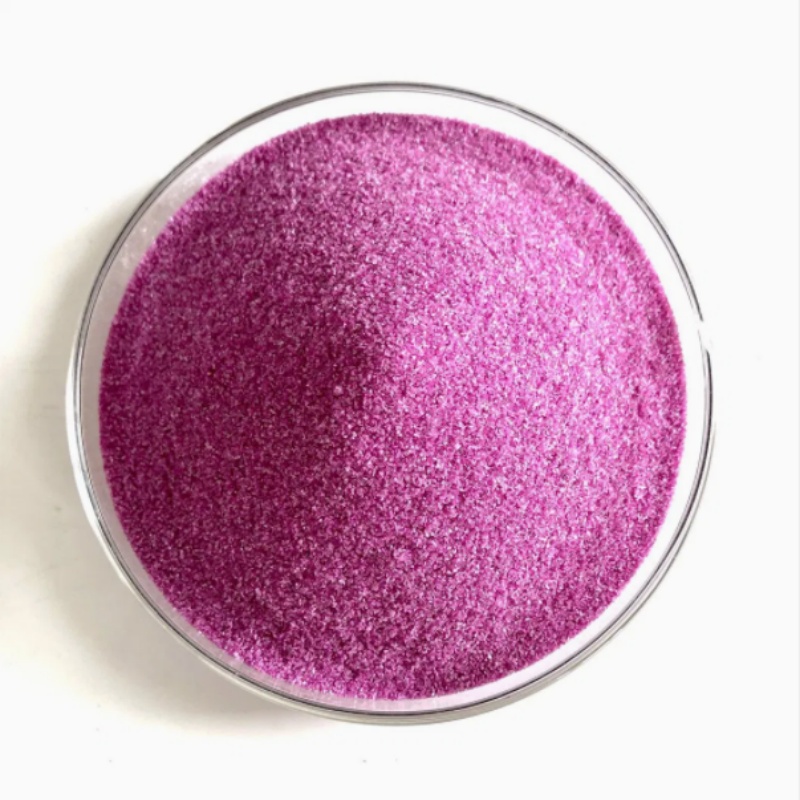
HONREL supplies Chromium Corundum PA in F16–F320, with low-, medium- and high-chromium grades covering 0.20–2.20% Cr₂O₃.
| Use | Typical Work | Why Chromium Corundum? |
|---|---|---|
| Precision grinding | Spindles, measuring tools, instrument parts | Tough grain with controlled breakdown |
| Thread & profile grinding | Threads, templates, shaped parts | Better grain retention |
| Grinding wheels | Bonded abrasive tools | Hardness and toughness balance |
| Coated abrasives | Wood sanding and surface work | Grain resists premature fracture |
| Non-ferrous metal grinding | Copper, brass | Supports smoother finishing |
| Refractories | High-temperature refractory materials | High refractoriness and Al₂O₃–Cr₂O₃ chemistry |
Table of Contents
1. Precision Grinding
Precision grinding is one of the main uses of chromium corundum.
Typical workpieces include measuring tools, machine tool spindles and instrument parts, where surface finish matters as much as stock removal.
The reason is grain behaviour.
White fused alumina is hard but relatively friable. Its grains fracture readily and expose fresh cutting edges. Chromium oxide makes the alumina grain tougher and less prone to premature breakdown.
That makes chromium corundum useful when the wheel is losing abrasive grains faster than the operation requires.
It does not mean tougher is always better. If self-sharpening is important, excessive grain retention can work against the process. Wheel bond, grit size, grinding load and workpiece material still need to be considered together.
2. Thread and Profile Grinding
Threaded workpieces, templates and other profile-ground parts place different demands on an abrasive than general surface grinding.
Here, uncontrolled grain breakdown can affect both wheel profile retention and the finish left on the workpiece.
Chromium corundum provides a useful middle ground: high alumina hardness with greater toughness than white corundum.
This makes it relevant for thread grinding, profile grinding and other precision operations where the abrasive needs to hold its cutting structure rather than fracture too quickly.
If an existing PA wheel already performs well, do not select a replacement grain by colour alone. Match the current Cr₂O₃ range and F-grit first.
3. Bonded Grinding Wheels
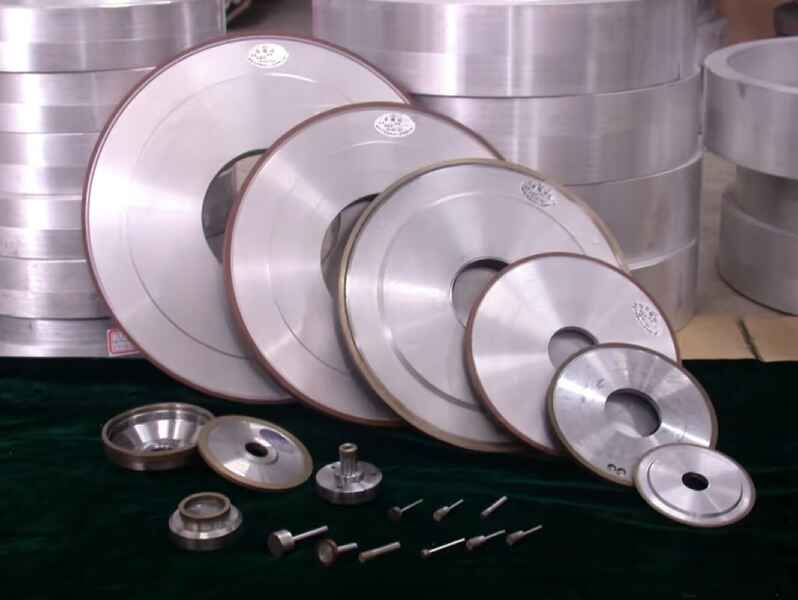
Chromium corundum is also a raw material for abrasive-tool manufacturers producing grinding wheels and related bonded products.
This is where the choice between low-, medium- and high-chromium PA becomes important.
HONREL supplies:
| HONREL PA Grade | Cr₂O₃ | Al₂O₃ | Standard Size |
|---|---|---|---|
| Low Chromium | 0.20–0.45% | ≥98% | F16–F320 |
| Medium Chromium | 0.45–1.00% | ≥98% | F16–F320 |
| High Chromium | 1.00–2.20% | ≥98% | F16–F320 |
Increasing Cr₂O₃ generally shifts the abrasive toward greater toughness, but high chromium is not automatically the better wheel grain.
If short wheel life comes from premature grain fracture, a tougher PA may be worth testing. If the problem is bond release, wrong grit, abrasive loading or grinding parameters, increasing Cr₂O₃ alone will not fix it.
For wheel manufacturers qualifying a second raw-material source, the cleaner approach is to match the current chemistry + F-grit + particle distribution before changing the formulation.
4. Coated Abrasives and Wood Sanding
Chromium corundum can also be used in coated abrasive production, including abrasives for wood sanding.
Unlike a bonded wheel, coated abrasive grains are fixed to a backing rather than distributed through a three-dimensional wheel structure. Premature grain fracture can therefore change cutting behaviour before the abrasive product has used its available grain effectively.
A tougher alumina grain can be useful where more grain retention is wanted.
There is one purchasing detail worth checking here.
Do not assume that an F-grit specification and a coated-abrasive P-grit specification are interchangeable. They belong to different grading systems.
HONREL’s current Chromium Corundum PA specification lists F16–F320. If your coated abrasive requires a particular particle-size distribution, send that requirement with the enquiry rather than ordering only by a familiar grit number.
5. Grinding Copper, Brass and Other Non-Ferrous Metals
Chromium corundum is also used for grinding non-ferrous metals such as copper and brass.
The benefit again comes from controlled grain breakdown.
Because chromium corundum is less prone to fracture than white corundum, it can support a smoother ground surface where rapid grain breakdown is undesirable.
But this is not simply a question of switching from white to chromium corundum.
Non-ferrous grinding can also be affected by wheel loading, bond selection, grit size and grinding conditions. If the wheel is loading rather than losing grain, changing Cr₂O₃ content may not address the actual problem.
6. High-Temperature Refractory Materials
Chromium corundum is not only an abrasive grain.
It is also used in special high-temperature refractory materials.
HONREL standard PA grades specify refractoriness above 1850°C, while fine powder is also available for refractory requirements.
The Al₂O₃–Cr₂O₃ system is relevant where refractory formulations need to withstand severe heat, wear and corrosive service conditions.
This is different from selecting abrasive grain.
For grinding, buyers normally start with F-grit, grain toughness and chemistry. For refractory formulations, chemical composition and the required particle-size distribution become more important.
If you are replacing an existing refractory raw material, send the current chemistry and size specification rather than selecting a grade from colour alone.
What Should You Specify When Ordering?
“Pink corundum” or “ruby corundum” is not enough for an industrial purchase order.
Commercial colour names vary between suppliers.
For a useful comparison, specify at least:
Cr₂O₃ range + Al₂O₃ purity + F-grit or particle-size requirement + quantity
HONREL’s standard Chromium Corundum PA specifications include:
Al₂O₃: ≥98%
Fe₂O₃: ≤0.3%
Na₂O: ≤0.35%
Cr₂O₃: 0.20–2.20%, depending on grade
Abrasive size: F16–F320
Refractoriness: >1850°C
Bulk density: 1.4–1.9 g/cm³
Apparent density: ≥3.8 g/cm³
One point is easy to miss: the bulk-density range covers multiple grit sizes. Do not compare bulk density between suppliers without checking the grit and test basis. Coarse and fine grains do not pack the same way.
Need Chromium Corundum for an Existing Product?
If you already manufacture grinding wheels, coated abrasives or refractory products, the fastest starting point is usually your current material.
Send HONREL the COA or TDS, grit/particle size, intended use and required quantity.
We can compare it against our low-, medium- and high-chromium PA specifications instead of asking you to select a material from the product name alone.
View HONREL Chromium Corundum, explore more Abrasive and Refractory Materials, or browse the full HONREL product range.
For an existing-grade match or a new requirement, contact HONREL with your specification.
FAQ
What is chromium corundum mainly used for?
Its main uses include precision grinding, thread and profile grinding, bonded abrasive tools, coated abrasives, non-ferrous metal grinding and high-temperature refractory materials.
Why use chromium corundum instead of white fused alumina?
Both have high hardness, but chromium corundum has higher toughness and is less prone to fracture. It is useful where white fused alumina breaks down faster than the process requires.
Which Cr₂O₃ grade should I use for grinding wheels?
Start with the behaviour you need or the chemistry of the material already in production. HONREL offers low chromium at 0.20–0.45%, medium chromium at 0.45–1.00% and high chromium at 1.00–2.20% Cr₂O₃.
Can chromium corundum be used for copper and brass?
Yes. HONREL lists copper, brass and other non-ferrous metals among its grinding uses, particularly where a smoother surface and less grain breakage are required.
Can chromium corundum be used in refractories?
Yes. HONREL supplies chromium corundum for special high-temperature refractory materials, with standard PA refractoriness listed above 1850°C and fine powder also available.
How do I match chromium corundum from another supplier?
Send HONREL the current COA or TDS together with the grit or particle-size requirement. Matching the existing chemistry and grading first is usually safer than changing both supplier and material specification at once.