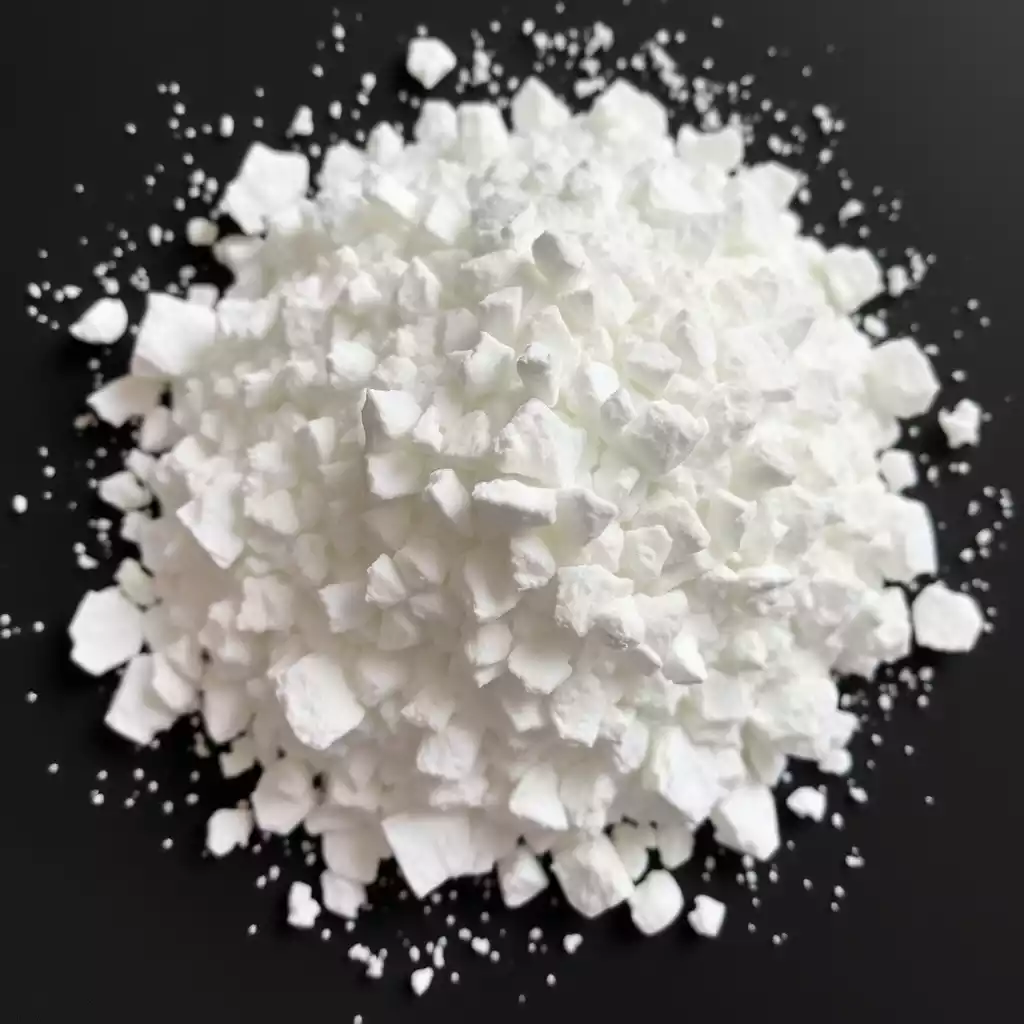

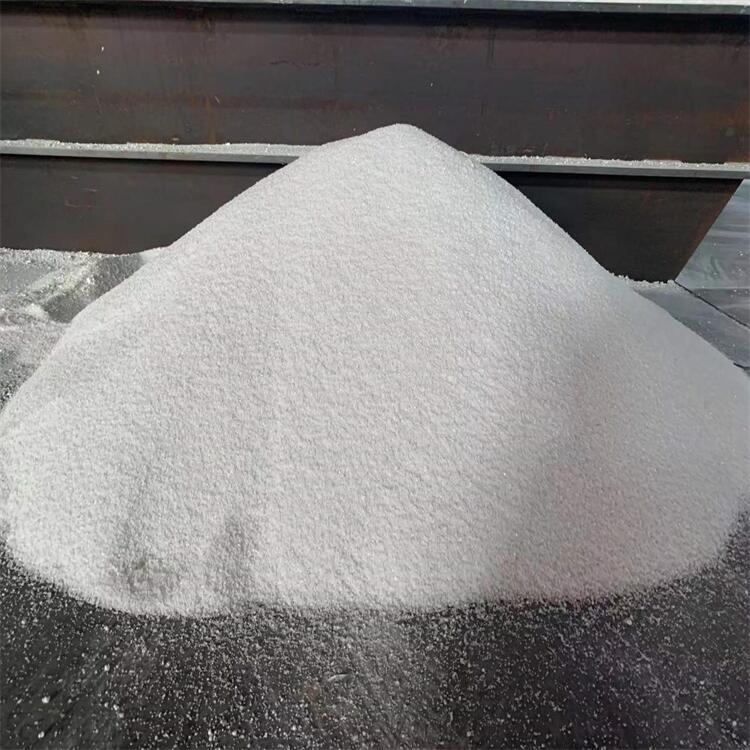
Low Sodium White Fused Alumina: Na₂O Grades for Abrasives and Refractories

Low sodium white fused alumina is used when standard WFA contains more Na₂O than an abrasive, refractory or ceramic formulation can accept.
HONREL supplies low sodium high purity white fused alumina with Al₂O₃ at 99.70–99.99% and Na₂O controlled within 0.01–0.20%.
The purchasing question is not simply whether lower sodium is better. It is how much Na₂O your application can accept without paying for a specification you do not need.
Table of Contents
Why Reduce Na₂O in White Fused Alumina?
During fusion, Na₂O can react with alumina and contribute to the formation of sodium-containing β-Al₂O₃.
Compared with the dominant α-Al₂O₃ phase, β-Al₂O₃ has lower hardness, density and melting point. Reducing sodium therefore helps preserve a higher proportion of the stable α-Al₂O₃ structure.
This is why two WFA products with apparently similar Al₂O₃ purity should not be treated as equivalent without checking Na₂O.
| Specification | Ordinary WFA | HONREL Low Sodium WFA |
|---|---|---|
| Al₂O₃ | <99.6% | 99.70–99.99% |
| Na₂O | 0.2–0.6% | 0.01–0.20% |
| Main reason to select | General industrial use | Tighter sodium and purity control |
Which Na₂O Grade Do You Need?
There is little value in purchasing an extremely low-sodium grade when the finished product only requires Na₂O ≤0.20%.
The correct limit depends on the formulation and performance requirement.
For bonded abrasives and grinding tools, lower sodium helps maintain the properties associated with high-purity α-Al₂O₃ grains.
For high-alumina refractories, tighter Na₂O control is relevant where alkali impurities and high-temperature stability are part of the raw-material specification.
For special ceramics, buyers may require both very high Al₂O₃ purity and a much tighter sodium limit.
Instead of specifying only: White Fused Alumina F46
specify: F46 + Al₂O₃ requirement + maximum Na₂O
That gives the supplier the information needed to match the actual material.
Do Not Compare WFA by Al₂O₃ Alone
For example, two suppliers may both offer high-purity F46 white fused alumina, but one material may have substantially tighter sodium control.
The better comparison is:
| Check | Why It Matters |
|---|---|
| Al₂O₃ | Overall alumina purity |
| Na₂O | Sodium/alkali control |
| Fe₂O₃ and SiO₂ | Other impurity limits |
| Particle size | Fit with the formulation or abrasive product |
| COA consistency | Repeatability between shipments |
This is especially important when qualifying a second source for an existing production line.
Replacing Your Current Low Sodium WFA
If you already use low sodium white fused alumina, send HONREL the current COA, TDS or purchasing specification.
There is no need to redesign the material specification.
HONREL can compare the required:
Na₂O → Al₂O₃ → other impurities → particle size
against its available low sodium high purity WFA.
This is useful when qualifying an alternative raw-material source without unnecessarily changing the existing abrasive or refractory formulation.
Available Grain Sizes
HONREL supplies standard abrasive F-grits from F4 to F220, covering coarse through fine WFA grades.
Different particle-size distributions can also be discussed for refractory and other industrial applications.
For an existing product, provide the current grain specification together with the chemical requirements rather than selecting particle size independently from chemistry.

Request a Low Sodium WFA Specification
If you already know what you need, send HONREL:
Na₂O limit + Al₂O₃ requirement + particle size + quantity
If you are replacing an existing material, simply send the current COA or TDS.
HONREL supplies low sodium white fused alumina with Na₂O from 0.01–0.20% and Al₂O₃ from 99.70–99.99% for abrasive, refractory and other high-purity applications.
HONREL normally responds to enquiries within 30 minutes with a matching specification and quotation.
FAQ
What is considered low sodium white fused alumina?
Low sodium high purity WFA is specified within 0.01–0.20% Na₂O, compared with the higher sodium levels found in ordinary WFA.
Is the lowest Na₂O grade always necessary?
No. Select the sodium limit required by the finished product. Using a substantially tighter specification than necessary may provide no practical benefit.