
Ammonia Synthesis Catalyst
Molecular Formula: Fe3O4
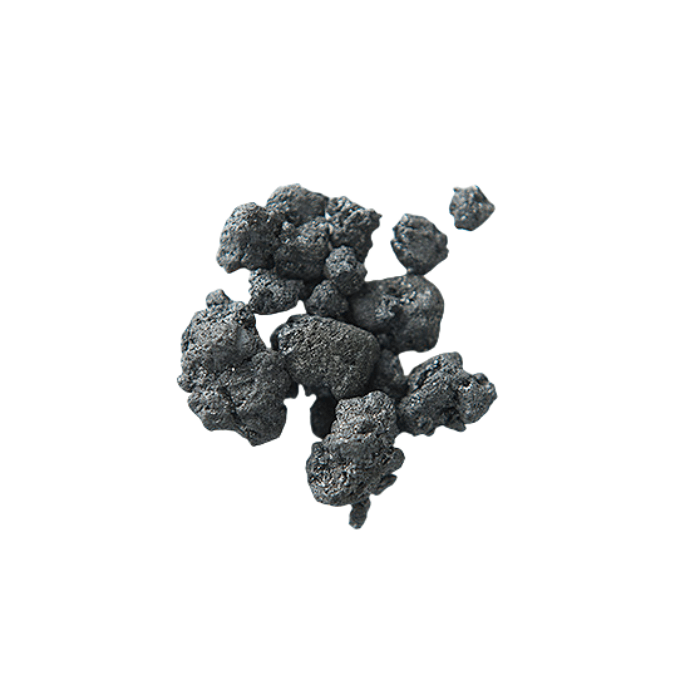
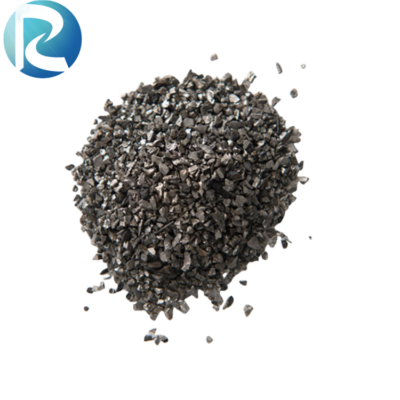
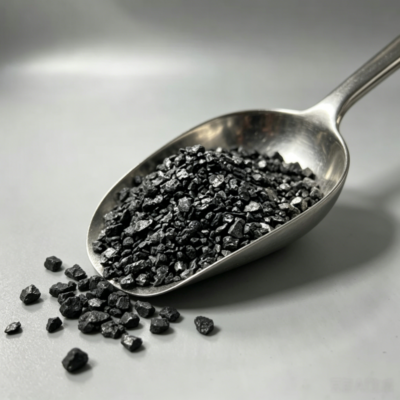
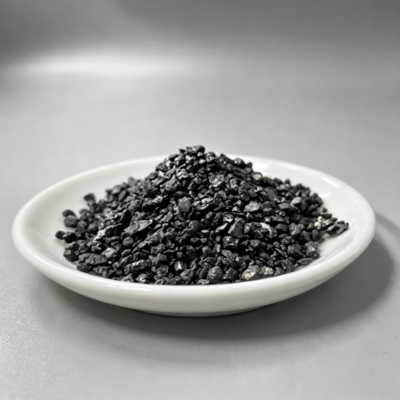
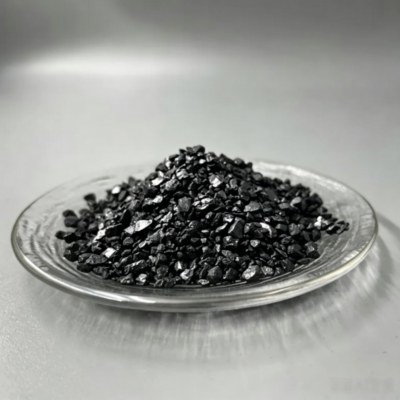
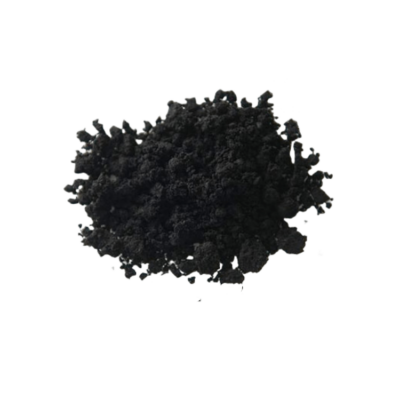
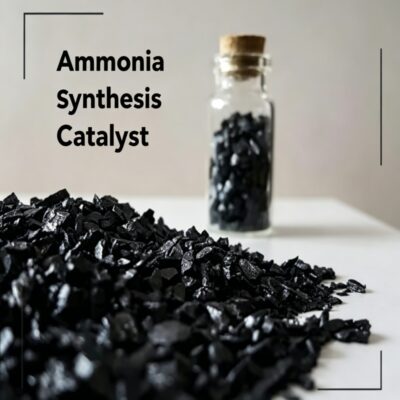
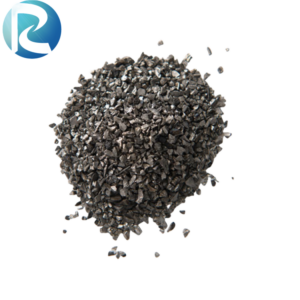
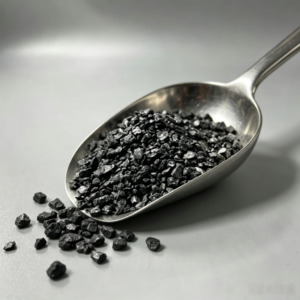
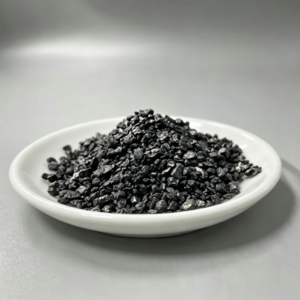
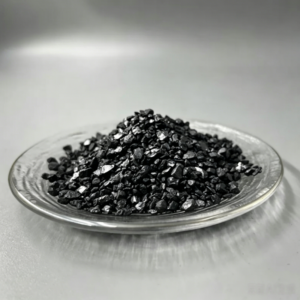
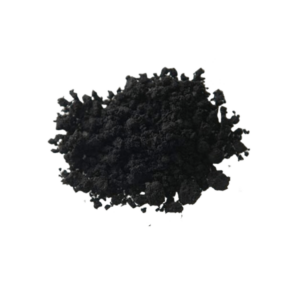
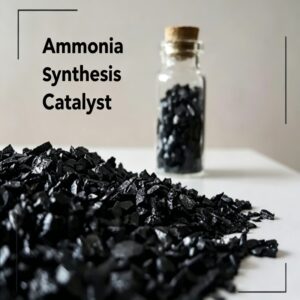
Appearance: Black,with metallic luster and magnetic properties,irregular solid particles
Size: 1.5~3.0、2.2~3.3、3.3~4.7、4.7~6.7、6.7~9.4、 9.4~13.0
Iron Cobalt Dual Active Ammonia Synthesis Catalyst are primarily deployed for ammonia production across the fertilizer sector. Featuring outstanding low-temperature catalytic activity, robust thermal stability, superior anti-poisoning performance and convenient reduction procedures, this product stands as an optimal catalyst for ammonia synthesis processes. Beyond fertilizer manufacturing, it also finds wide application in metallurgy and electronic tube industries, where it facilitates ammonia cracking to generate high-purity nitrogen and hydrogen.
HY201 is an ammonia synthesis catalyst with dual active components of iron and cobalt.It is a substitute for the HY110 type pure iron-based catalyst,and its activity is significantly improved especially under low-temperature and low-pressure application conditions,representing a leap forward and innovation in the quality of ammonia synthesis catalysts.HY201-2 is an improved version of the HY201 catalyst. With special additives added,it not only retains the high activity performance of HY201 under low temperature and low pressure,but also can be used for a long time at high temperatures(above 495℃).It is a wide-temperature 、high-activity type catalyst,with further improved heat resistance,thermal stability, anti-toxicity performance and service life.Laboratory tests have proved that compared with similar products,the concentration of exported ammonia has increased by 1-2 percentage points.
The HY201-2 ammonia synthesis catalyst is easy to reduce.It starts to remove physical water at 160℃, begins to produce water during reduction at 280℃-320℃,and significantly produces water at 350-380℃.The main water-producing period during reduction is at 420-450℃,and the maximum reduction temperature is 490℃.The temperature at which a large amount of water is produced is about 20℃ lower than that of the HY110 series.
HY201-2-H ammonia synthesis catalyst is a pre-reduced catalyst produced on the basis of HY201-2 type by adjusting the formula and adopting a process that meets the optimal reduction conditions of the catalyst in a special device.As a premium pre-reduced model, HY201-2-H features easy reduction, low effluent emission, short start-up period and stable bed performance for high-efficiency and energy-saving ammonia production.
HA201-2-H Ammonia Synthesis Catalyst’s main features:
- Superior reducibility. The catalyst features a low initial reduction temperature, with the reduction reaction initiating at approximately 200°C. A prominent reduction reaction occurs within the temperature range of 250~300°C, and the main reduction stage starts above 300°C. Meanwhile, its final reduction temperature is as low as 460°C, enabling efficient and mild reduction.
- Excellent low-temperature and low-pressure catalytic activity. Adopting an iron-cobalt dual active component system, the catalyst achieves high catalytic efficiency under low-temperature and low-pressure operating conditions, delivering outstanding ammonia synthesis performance under mild working conditions.
- Low water discharge during reduction. It produces only about 10% of the effluent volume compared with conventional oxidized ammonia synthesis catalysts, which significantly reduces dilute ammonia discharge and lowers operational environmental pressure.
- Integral furnace catalytic performance optimization. The catalyst realizes uniform and high-quality reduction in the full furnace bed, effectively improving the overall working performance and service effect of the entire catalyst layer.
- High-purity pre-reduction treatment. The catalyst is pre-reduced in dedicated equipment under standardized technological conditions. High-precision process gas purification is implemented throughout the reduction process, which avoids catalyst contamination and greatly upgrades the intrinsic quality and stability of the catalyst.
- Greatly shortened plant start-up cycle. Its start-up time is only 1/4 to 1/5 of that of conventional oxidized catalysts, which substantially cuts down start-up time costs and improves plant operational efficiency.
7. Stable catalyst bed structure. The catalyst bed presents no obvious settlement after loading and operation, which maintains stable bed layer height and ensures long-term, stable and consistent catalytic effect.
Product application:
Fertilizer industry,it can also be used in the metallurgical and electronics industries to decompose ammonia into hydrogen and nitrogen.
| item | unit | HA201-2 | HA201-2-H |
| Appearance | Black,with metallic luster and magnetic properties,irregular solid particles | Silver-gray,with metallicluster and magnetic properties,irregular solid particles | |
| Size | mm | 1.5~3.0、2.2~3.3、3.3~4.7、4.7~6.7、6.7~9.4、
9.4~13.0 |
|
| Bulk density | Kg/l | 2.9~3.2 | 2.2~2.5 |
| Particle density | Kg/l | 3.8~4.2 | 2.8~3.2 |
| Skeleton density | Kg/l | 7.2~7.6 | 7.2~7.6 |
| Porosity | % | ~45 | ~45 |
| Form factor | φs | Large-particle catalyst: 0.40~0.50
Small particle catalyst: 0.50~0.60 |
|
Related products
-

Ruthenium catalyst / Ruthenium on activated charcoal
Ruthenium catalyst/Ruthenium on activated charcoal CAS No.:7440-18-8 Specifications: Ru 101,…
-

Fe-Mo Iron Molybdenum Catalyst for Formaldehyde Production
Fe-Mo Iron Molybdenum catalyst is a kind of iron molybdenum-based…
-

Cupric hydroxide
Properties: Cupric hydroxide, with the chemical formula Cu(OH)2, has the…
-

Antichlor
Dechlorinating agent is a specialized purification material developed for the…