
Where to Buy Ammonia Synthesis Catalyst for Industrial Ammonia Plants

HONREL supplies iron-cobalt ammonia synthesis catalyst for industrial ammonia plants, including oxidised and pre-reduced grades for new catalyst charges and replacement projects.
The catalyst is available in six particle-size ranges, with defined bulk density, particle density and porosity. For an existing ammonia converter, HONREL can work from the current catalyst specification, bed volume and required charge to confirm the supply requirement.
Table of Contents
Ammonia Synthesis Catalyst Grades
HONREL provides two forms of the iron-cobalt dual-active catalyst.
The oxidised grade is reduced after loading into the ammonia converter. The pre-reduced grade completes most of this reduction before delivery, reducing the activation work required during plant start-up.
| Specification | Oxidised Grade | Pre-Reduced Grade |
|---|---|---|
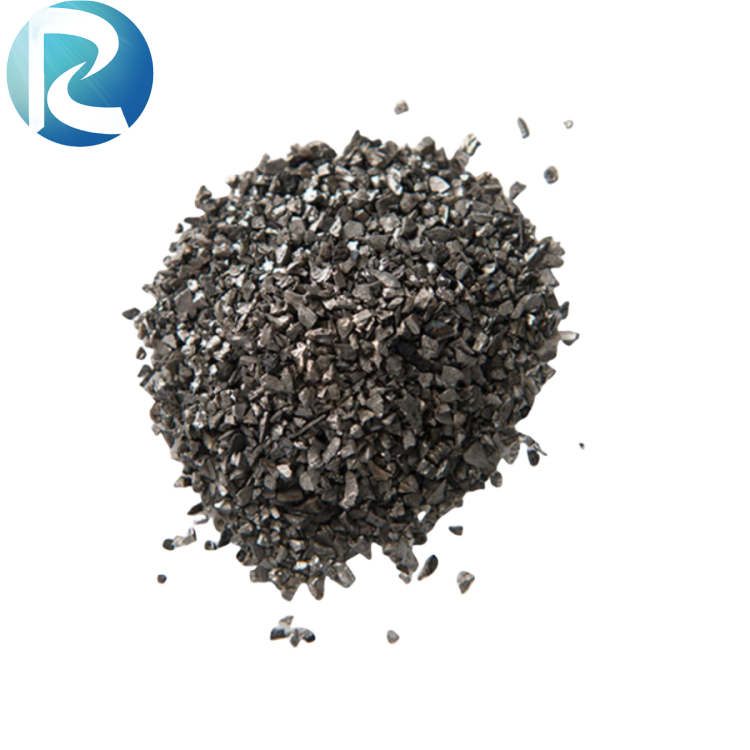
| Appearance | Black, metallic, irregular particles | Silver-grey, metallic, irregular particles |
| Bulk density | 2.9–3.2 kg/L | 2.2–2.5 kg/L |
| Particle density | 3.8–4.2 kg/L | 2.8–3.2 kg/L |
| Skeletal density | 7.2–7.6 kg/L | 7.2–7.6 kg/L |
| Porosity | Approx. 45% | Approx. 45% |
The pre-reduced material is particularly relevant when the turnaround window is short.
According to HONREL’s product data, it produces about 10% of the reduction effluent of a conventional oxidised catalyst, while the stated start-up period is approximately one-quarter to one-fifth of the conventional oxidised route.
See the complete HONREL Ammonia Synthesis Catalyst specification.
Particle Sizes for Ammonia Converters
HONREL supplies six granule ranges:
1.5–3.0 mm, 2.2–3.3 mm, 3.3–4.7 mm, 4.7–6.7 mm, 6.7–9.4 mm and 9.4–13.0 mm.
This gives plants more flexibility when matching an existing converter charge.
Particle size matters because it affects gas flow through the catalyst bed and pressure drop. For a replacement order, the current catalyst size is normally the most useful reference.
If a plant already has an established loading specification, HONREL can use that specification when confirming the replacement material.
Oxidised Catalyst for Conventional Start-Up
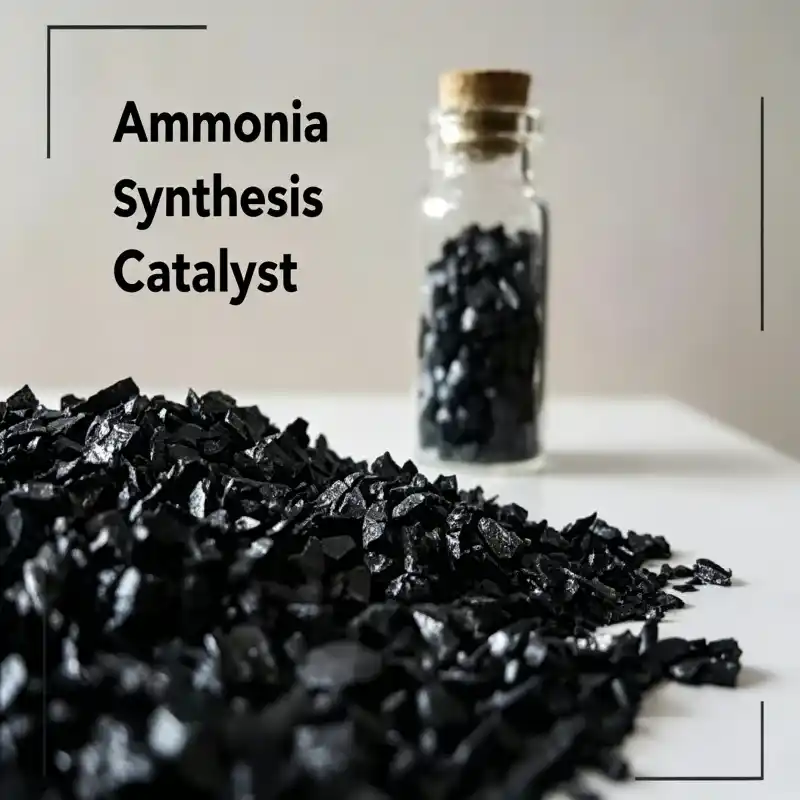
The oxidised version is suited to ammonia plants with an established catalyst reduction procedure.
The reduction water begins to appear at around 280–320°C, becomes significant at 350–380°C, and reaches its main water-producing stage at approximately 420–450°C. The listed maximum reduction temperature is 490°C.
This grade is a practical option when the plant already has the time, utilities and operating procedure required for in-situ reduction.
For replacement projects following the same catalyst route, it also allows the plant to stay close to its existing start-up practice.
Pre-Reduced Catalyst for Shorter Turnarounds
The pre-reduced version is intended to reduce the work between catalyst loading and normal ammonia production.
The reduction beginning at around 200°C, becoming prominent at 250–300°C, with the main reduction above 300°C. The final reduction temperature can be as low as 460°C.
The main commercial value is not simply a different catalyst form. It is the shorter route back to production.
For plants where every hour of turnaround matters, reduced activation time and lower reduction-water generation can simplify start-up and shorten the period before the synthesis loop returns to service.
Low-Temperature and Low-Pressure Ammonia Synthesis
HONREL’s iron-cobalt formulation is designed for ammonia synthesis under relatively low-temperature and low-pressure conditions while maintaining a broad operating temperature range.
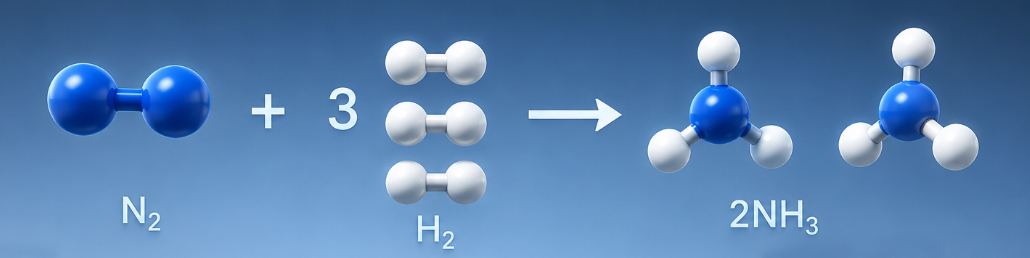
The catalyst promotes the reaction of nitrogen and hydrogen to form ammonia in the synthesis converter:
N₂ + 3H₂ ⇌ 2NH₃
For industrial plants, catalyst activity at lower operating severity can support synthesis-loop performance without relying only on higher temperature.
HONREL also states that the oxidised grade can operate for extended periods above 495°C, giving the catalyst a relatively wide operating window.
Catalyst Loading for Replacement Projects
For an existing converter, the required tonnage should be based on the selected grade and available catalyst-bed volume.
This is particularly important when changing from oxidised to pre-reduced material.
The oxidised grade has a bulk density of 2.9–3.2 kg/L, compared with 2.2–2.5 kg/L for the pre-reduced version. The same bed volume can therefore require a different catalyst weight.
A replacement charge can be reviewed from:
Existing catalyst specification + particle size + bed volume + previous loading
This is more reliable than simply repeating the tonnage from the previous purchase order.
Supply for New Ammonia Plants and Catalyst Replacement
HONREL supplies ammonia synthesis catalyst for two common purchasing scenarios.
For a new ammonia plant, supply can be matched against the converter specification, required particle size and catalyst-bed volume.
For a catalyst replacement, the existing grade and loading data provide the starting point. Plants changing to a pre-reduced charge can also compare the different bulk density and start-up requirements before confirming the quantity.
This keeps the commercial order tied to the actual converter rather than a generic catalyst specification.
Bulk Ammonia Synthesis Catalyst Supply from HONREL
HONREL supplies industrial quantities for ammonia production projects and scheduled catalyst replacement.
For a bulk requirement, send the required catalyst form, particle size, bed volume or required quantity, destination and delivery schedule.
For an existing plant, the current catalyst datasheet or loading record is useful. HONREL can review the information against its available specification before preparing the quotation.
You can view other industrial catalysts or browse HONREL’s product range when sourcing additional materials for the same chemical plant.
For an ammonia synthesis catalyst requirement, contact HONREL with the converter and loading information.
FAQ
Where can I buy ammonia synthesis catalyst for an industrial plant?
HONREL supplies iron-cobalt ammonia synthesis catalyst for new ammonia plants and replacement charges, with oxidised and pre-reduced options and six particle-size ranges.
Does HONREL supply pre-reduced ammonia synthesis catalyst?
Yes. HONREL offers a pre-reduced version designed to reduce activation work, reduction-water generation and start-up time compared with the conventional oxidised route.
What particle sizes are available?
Available ranges are 1.5–3.0, 2.2–3.3, 3.3–4.7, 4.7–6.7, 6.7–9.4 and 9.4–13.0 mm.
Which catalyst is better for a short turnaround?
The pre-reduced version is the more relevant option when reducing start-up time is a priority. HONREL states that its start-up period can be approximately one-quarter to one-fifth of the conventional oxidised route.
Can HONREL supply a replacement for an existing ammonia catalyst?
HONREL can review the existing catalyst specification, particle size, bed volume and loading requirement against its available product specification. A technical match should be confirmed before treating a different catalyst as a direct replacement.
How much ammonia synthesis catalyst is required?
The quantity depends on catalyst-bed volume and the bulk density of the selected grade. This is especially important when changing between oxidised and pre-reduced material because their bulk densities differ.
What should I send HONREL for a bulk quotation?
Send the required catalyst form, particle size, bed volume or quantity, destination and required delivery date. For a replacement project, include the existing catalyst specification or loading data if available.