
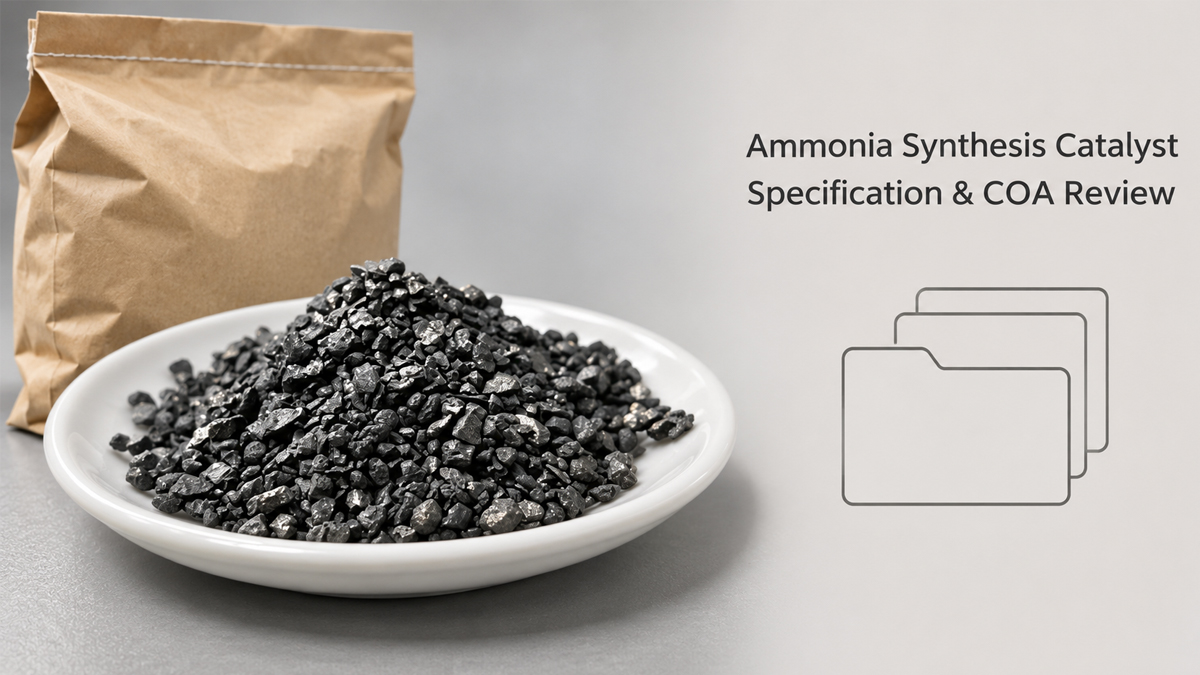
Ammonia Synthesis Catalyst COA: What Buyers Should Confirm Before Ordering

If you are replacing an existing ammonia synthesis catalyst, do not approve the order from a product name or generic datasheet alone.
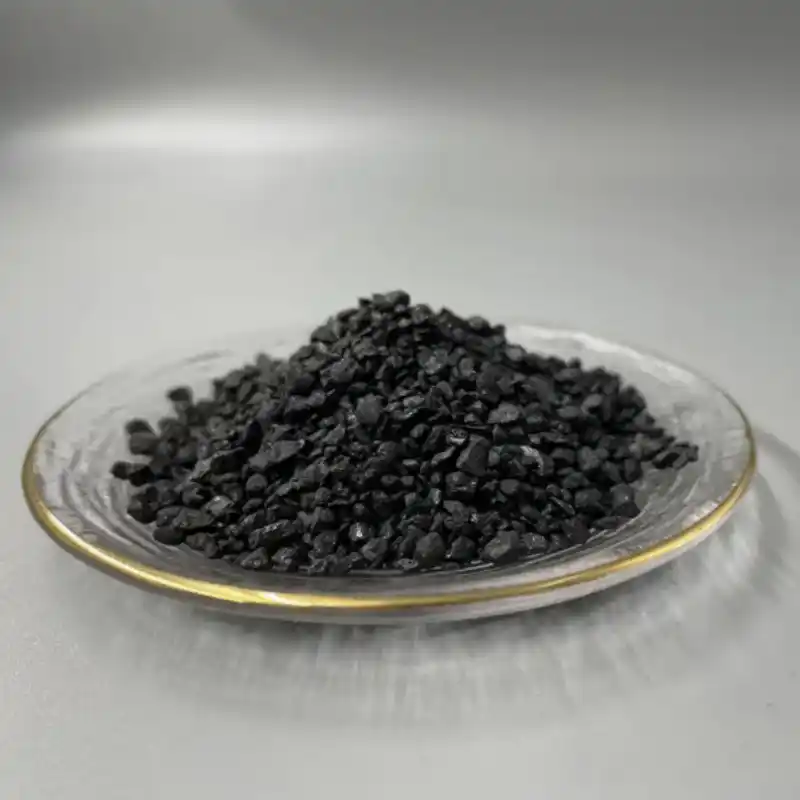
Ask the supplier to confirm how the proposed product matches your current catalyst: oxidized or pre-reduced condition, particle size, bulk density and the batch documents required by your plant.
That is the practical value of the COA. It connects the material offered during quotation with the material eventually delivered.
HONREL supplies ammonia synthesis catalyst in oxidized and pre-reduced forms. Send us your current TDS or COA, and we can compare it with the available HONREL specifications before you place an order.
Table of Contents
Make Sure the Quotation and COA Describe the Same Product
The quotation, technical specification and final COA must refer to the same catalyst.
Focus on the items that could change the order quantity, loading conditions or approval result.
| Confirm before ordering | Why it matters |
|---|---|
| Catalyst condition | Oxidized and pre-reduced products require different activation arrangements |
| Particle-size range | The wrong size may change bed pressure drop and gas distribution |
| Bulk density | Determines how much catalyst is required for the available bed volume |
| Strength or activity basis | Results are comparable only when the test basis is known |
| Batch identification | Connects the delivered packages with the approved COA |
You do not need the longest COA. You need a COA that confirms the product you actually agreed to buy.
Oxidized and Pre-Reduced Catalysts Are Different Orders
HONREL offers both oxidized and pre-reduced iron-cobalt ammonia synthesis catalysts.
The oxidized version requires full reduction after loading. The pre-reduced and stabilized version shortens the on-site activation process, but it still requires the correct handling and start-up procedure.
The difference also affects loading quantity.
HONREL publishes a bulk-density range of 2.9–3.2 kg/L for the oxidized product and 2.2–2.5 kg/L for the pre-reduced version. The same converter volume therefore does not require the same order weight.
If you are changing from oxidized to pre-reduced catalyst, do not copy the tonnage from the previous purchase order. Compare the selected grade with the usable bed volume first.
Particle Size Must Follow the Converter
HONREL provides six particle-size ranges, from 1.5–3.0 mm to 9.4–13.0 mm. This does not mean every size is suitable for every ammonia converter.
For a straightforward replacement, the current proven particle size should be the starting point.
Changing to a smaller particle may increase bed resistance. Moving to a larger size may change catalyst packing and gas contact. Neither change should be made simply because a supplier has that size in stock.
If the existing charge has shown increasing differential pressure, include the pressure-drop history when requesting a replacement. Broken particles, fines and uneven loading may be part of the problem. Read more about ammonia synthesis catalyst pressure drop and fines.
Confirm the Document Scope Before Production
COA requirements should be settled during quotation, especially when your company has a formal supplier-approval process.
Tell the supplier whether you need:
- Actual batch results or specification limits
- Separate COAs for different production lots
- Package-to-batch traceability
- A specific COA format
- Retained samples or third-party inspection
- Storage and handling documents
These requirements may affect production planning and shipment preparation. Asking for them after the material has been produced can delay approval and delivery.
Let HONREL Compare the Existing Specification
You do not need to rewrite your catalyst specification before contacting HONREL.
Send the document you already use. It may be an existing COA, TDS, purchase specification or loading record.
HONREL can review:
- Whether an oxidized or pre-reduced grade is required
- Whether the current particle size is available
- How bulk density affects the estimated order quantity
- Which published specifications match the existing product
- Which batch documents need to be confirmed before quotation
If any requirement cannot be confirmed from the available product data, it should be identified before the order—not discovered when the catalyst reaches the plant.
Request a Specification Match From HONREL
For a faster review, send HONREL your current catalyst model, particle size, bed volume, previous loading weight, required quantity and delivery destination.
Include the existing TDS or COA whenever possible. This allows the enquiry to begin with a real specification rather than a general request for “ammonia synthesis catalyst.”
Contact HONREL to submit your current catalyst documents and request a specification and bulk-supply review.