
Pink Fused Alumina Grit Selection for Vitrified Grinding Wheels

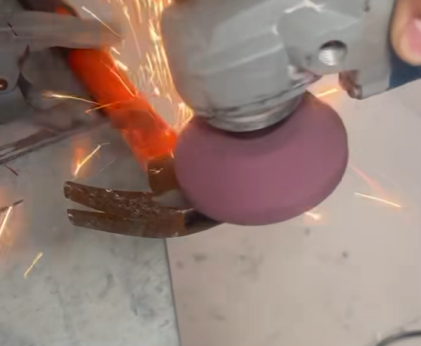
For vitrified grinding wheels, start with F36–F60 for stock removal, F60–F100 for general precision grinding, F100–F150 for finer form and finish, and F180–F220 when low roughness is the priority. These are starting ranges, not fixed wheel formulas.
The correct pink fused alumina grit also depends on the contact area, workpiece material, infeed, wheel speed, bond grade, structure and dressing method. If those factors are ignored, changing from F60 to F80 may reduce cutting pressure without solving burn, loading or premature wheel wear.
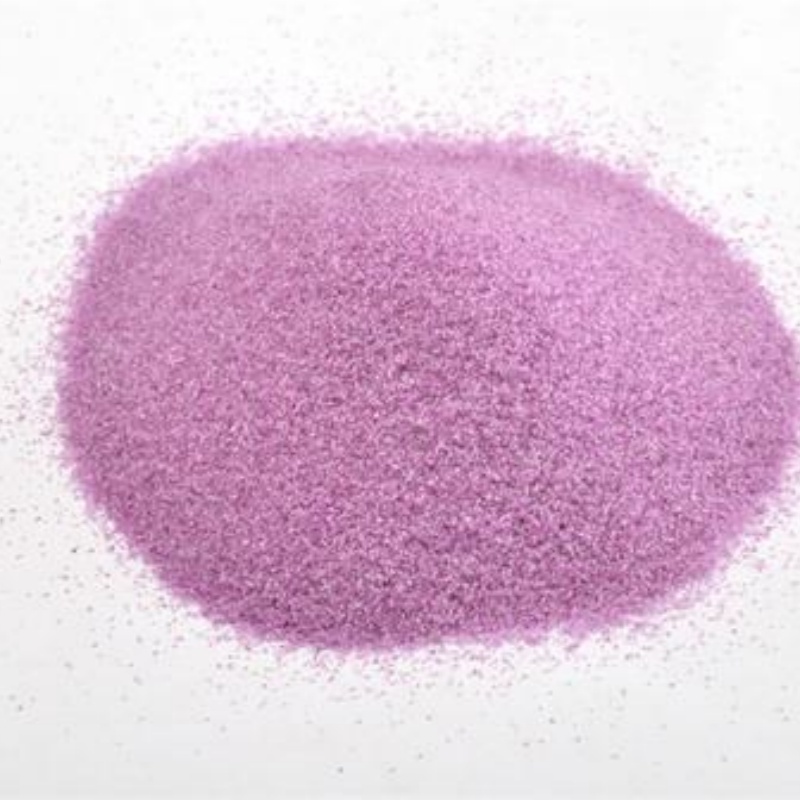
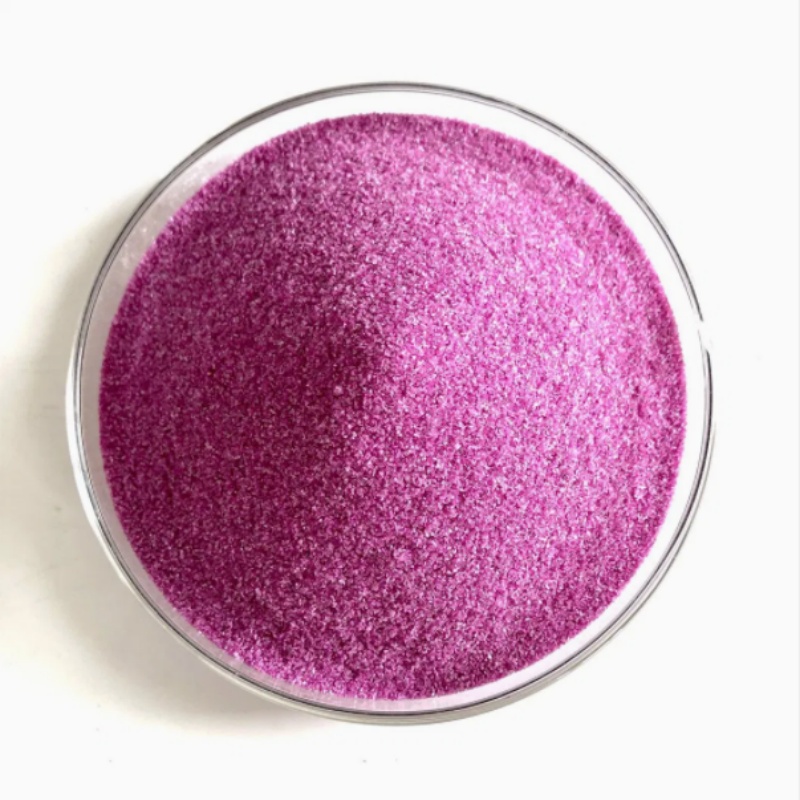
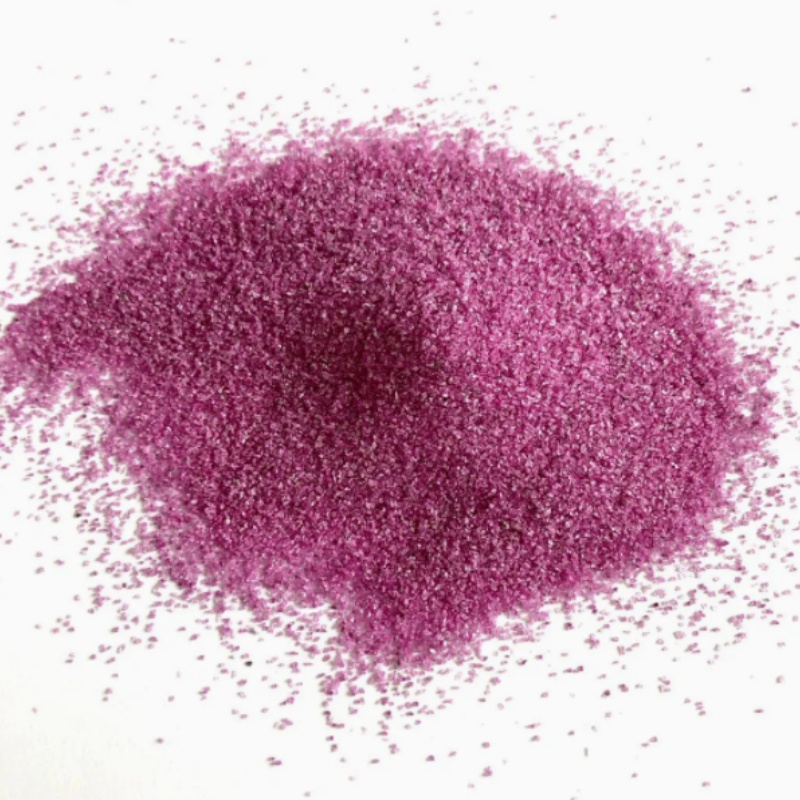
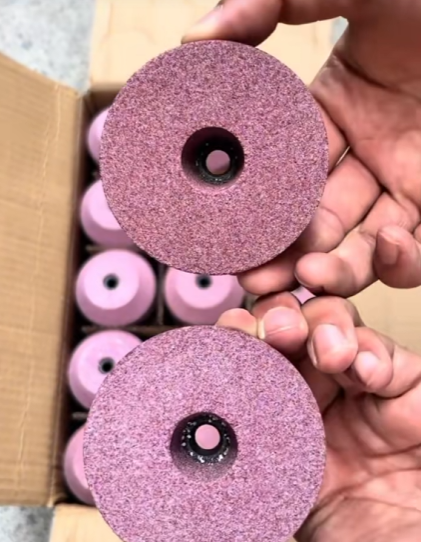
Pink fused alumina is also sold as chromium corundum, pink corundum, pink aluminum oxide or PA abrasive grain. HONREL supplies chromium corundum in FEPA F-grits for bonded abrasive production.
Table of Contents
Use the Grit Range as a Starting Point
| FEPA F-grit | Practical starting duty | Main trade-off | Verify in the wheel trial |
|---|---|---|---|
| F16–F30 | Heavy stock removal under high grinding pressure | High removal rate but coarse scratch pattern | Grain retention, vibration and wheel strength |
| F36–F60 | Rough and semi-finish grinding | Balances cutting rate and finish | Power draw, burn and dressing interval |
| F60–F100 | Tool, cylindrical and general precision grinding | More cutting points and better finish | Loading, form retention and cycle time |
| F100–F150 | Fine grinding and profile work | Lower scratch depth but less chip clearance | Surface finish, heat and edge retention |
| F180–F220 | Fine finishing with light stock removal | Smoother finish but higher loading risk | Dressing frequency and coolant access |
| F230–F320 | Specialised microgrit wheels | Very fine finish with restricted stock removal | Microgrit standard, dispersion and firing consistency |
FEPA uses F-grit designations for bonded abrasives. F4–F220 are macrogrits, while F230 and finer are microgrits with a different control method. Do not write “80 mesh,” “P80” or “F80” as if they are interchangeable.
The table should be used to select a short trial list. Final approval must come from grinding and wheel-production tests.
Contact Area Can Change the Correct Choice
A small grinding contact places more force on each active grain. A finer grit can divide that force across more cutting points and support a finer profile. This is often relevant in internal, tool and narrow-contact grinding.
A wide contact area spreads the load over more grains. A coarser grit provides more chip space and raises the force acting on each grain, helping it cut instead of rubbing. Surface and creep-feed operations may therefore need a coarser or more open specification than the required finish alone suggests.
This is why workpiece hardness is not enough to select the abrasive. Hardened tool steel, high-speed steel and alloy steel may all use pink fused alumina, but the suitable F-grit changes with contact length, stock allowance, coolant and machine stiffness.
Solve the Grinding Symptom Before Changing Grit
| Grinding problem | Possible grit-related cause | Check before changing the PA grade |
|---|---|---|
| Workpiece burn or glazing | Grit is too fine for the stock removal and contact area | Wheel grade, structure, dressing and coolant delivery |
| Wheel loading | Insufficient chip space or excessive fine material | Workpiece ductility, porosity and dressing condition |
| Deep random scratches | Oversize grain or foreign coarse particles | FEPA grading, sieve control and handling cleanliness |
| Finish is too rough | Grain may be too coarse | Dressing lead, vibration and retained coarse particles |
| Wheel loses form too quickly | Grain or bond releases too early | Bond grade, firing result and grinding pressure |
| Cutting rate falls after dressing | Grain becomes dull instead of renewing | Chromium grade, bond retention and dressing parameters |
Selecting a finer grit may improve surface finish, but it can also increase rubbing and heat. Selecting a coarser grit may reduce loading, but it will not correct an out-of-spec grain distribution or an unsuitable vitrified bond.
Specify More Than “Pink Fused Alumina F60”
A useful purchasing specification should include:
| Purchase item | What to state |
|---|---|
| Material | Pink fused alumina or chromium corundum for vitrified bonded abrasives |
| Grit | FEPA F-grit and applicable macrogrit or microgrit standard |
| Chemistry | Required Cr₂O₃ grade, minimum Al₂O₃ and impurity limits |
| Particle distribution | Applicable FEPA limits and any additional oversize control |
| Bulk density | Target or acceptance range for the exact grit |
| Cleanliness | Magnetic matter and foreign-particle requirements |
| Batch evidence | Lot-specific COA and traceable sample |
| Trial information | Wheel type, bond system, firing temperature range and end use |
Do not approve PA abrasive grain by colour alone. Pink, rose and ruby descriptions do not define Cr₂O₃ content or grit distribution.
HONREL’s article on changing chromium corundum suppliers explains how to match an existing material without immediately changing the wheel formula.
Request a PA Grit Match from HONREL
HONREL supplies pink fused alumina within its abrasive and refractory materials range. Standard chromium corundum abrasive sizes cover F16–F320.
For a useful recommendation, send:
- current PA grade or COA;
- required FEPA F-grit;
- vitrified wheel type and grinding operation;
- workpiece material;
- current problem or target result;
- trial quantity, regular volume and destination.
HONREL can compare the available chromium corundum grade and grit with your current specification before quotation.
Contact HONREL to request a sample or specification match for vitrified grinding wheel production.