
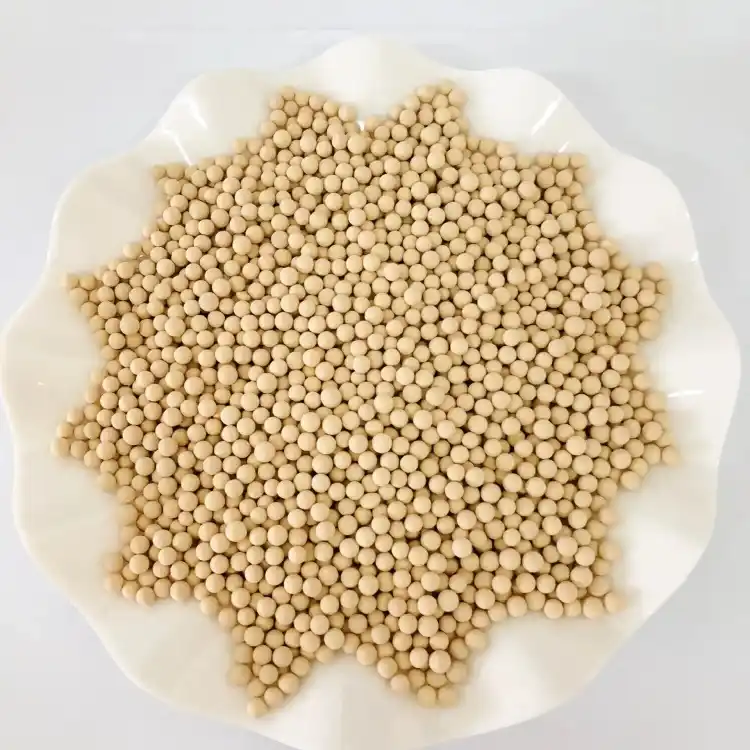
13X Molecular Sieve for Air Separation Bead Size and CO2 Capacity

Elección 13X molecular sieve for air separation is not a matter of taking the smallest bead or the highest CO₂ number on a data sheet.
The adsorbent must remove carbon dioxide and water before the feed air enters the cold box. It must also keep a stable pressure drop through repeated adsorption and regeneration cycles. The wrong particle size, damaged beads or an unevenly loaded bed can restrict airflow even when the fresh material passes its static adsorption test.
For a replacement project, buyers should compare four items together: CO₂ capacity, particle size, mechanical strength and the actual bed-loading requirement.
Tabla de contenido
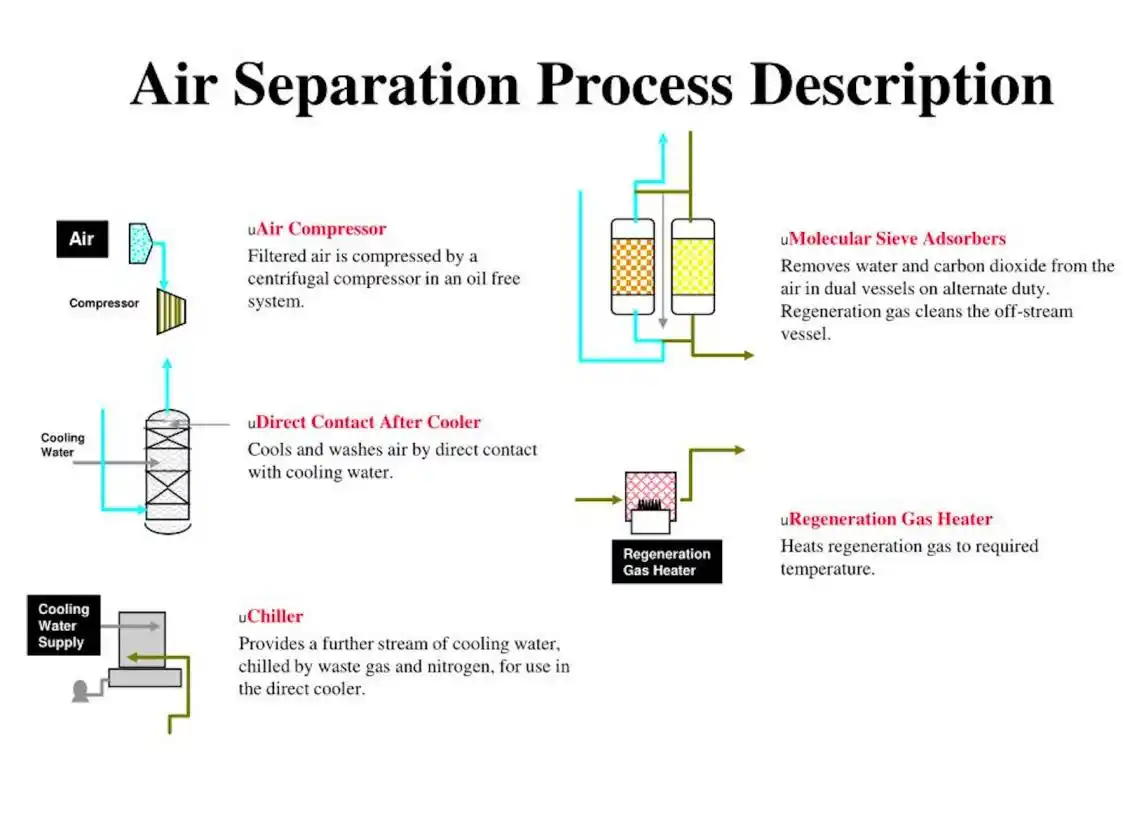
Why 13X Is Used Before Cryogenic Air Separation
Feed air contains water vapour, CO₂ and trace hydrocarbons that can freeze or accumulate in the cryogenic section. Type 13X is a sodium-form X zeolite with an effective pore opening of about 10 Å. Its pore structure makes it suitable for co-adsorbing water and carbon dioxide before liquefaction.
An ASU bed must hold the CO₂ mass-transfer front inside the vessel until switchover, then release the adsorbed load during regeneration. Breakthrough time and repeatable working capacity matter more than one isolated laboratory result.
HONREL Bead Sizes and Static CO2 Capacity
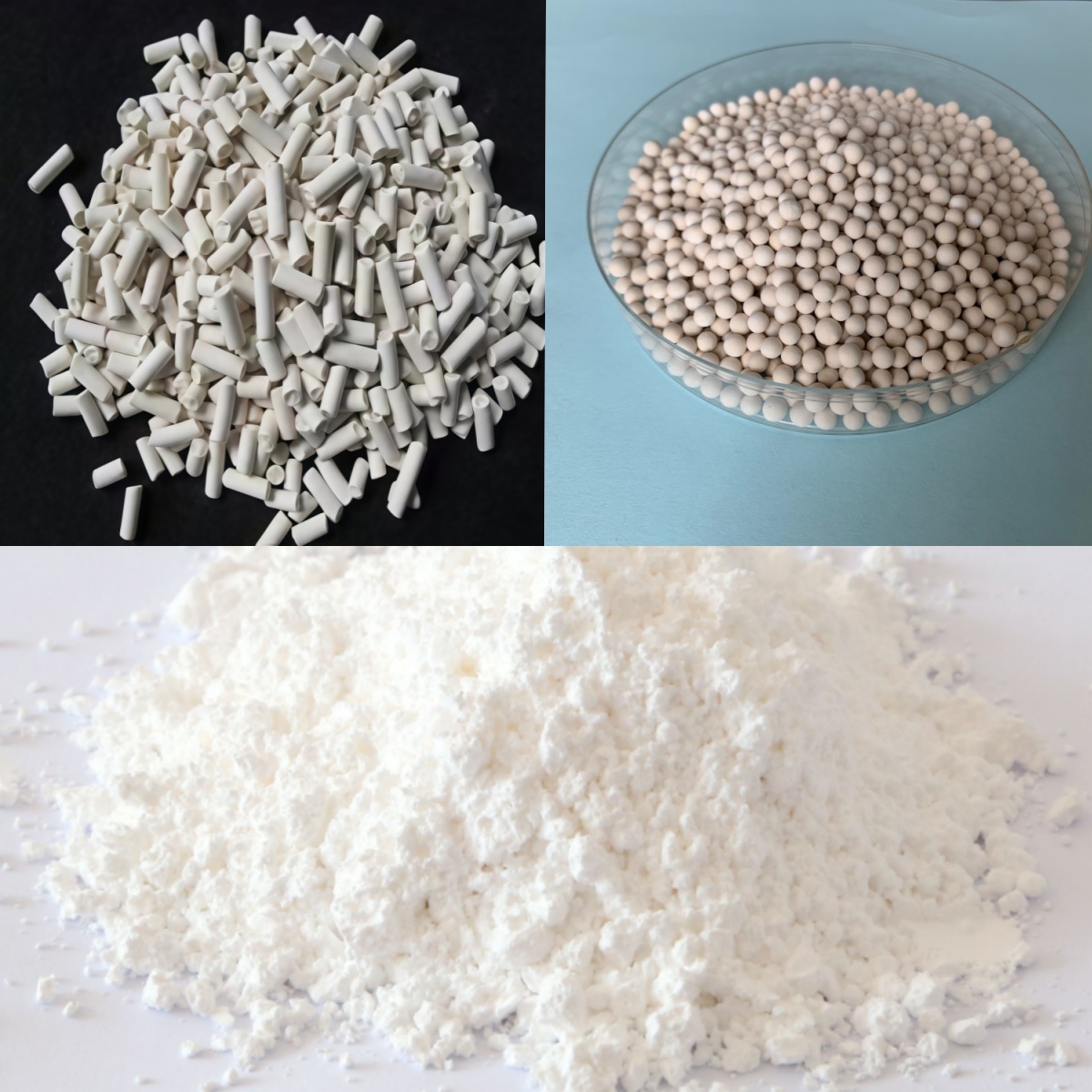
Suministros HONREL Tamiz molecular 13X as spherical beads, cylindrical extrudates and base powder. Fixed-bed air-purification systems normally use beads or extrudates rather than loose powder.
The following values are taken from HONREL’s current first-class product specification:
| Form and nominal size | Adsorción estática de CO₂ a 25 °C | Adsorción estática de CO₂ a 0 °C | Attrition rate | Crushing strength |
|---|---|---|---|---|
| Extrudate, 1.5–1.7 mm | ≥17.5 wt% | ≥19.0 wt% | ≤0,10% | ≥30 N/tira |
| Extrudate, 3.0–3.3 mm | ≥17.5 wt% | ≥19.0 wt% | ≤0,20% | ≥45 N/tira |
| Bead, 1.6–2.5 mm | ≥18.5 wt% | ≥20.0 wt% | ≤0,10% | ≥30 N/partícula |
| Bead, 3.0–5.0 mm | ≥18.5 wt% | ≥20.0 wt% | ≤0,10% | ≥85 N/partícula |
The important point is easy to miss. Within the same product form and quality grade, HONREL lists the same equilibrium CO₂ capacity for both particle ranges. The size difference mainly changes adsorption rate, pressure loss, individual crush strength and loading behaviour.
Do not compare these percentages with another supplier’s figure unless the test conditions match. A result measured at 25°C and 250 mmHg CO₂ partial pressure is not directly comparable with a low-concentration breakthrough test, a different temperature or a humid feed.
Static Capacity Does Not Predict Bed Run Length by Itself
Static capacity is useful for quality control. It shows how much CO₂ a fully activated sample can hold at defined equilibrium conditions. An operating air pre-purifier is cyclic and rarely reaches that equilibrium across the entire bed.
Dynamic or working capacity depends on inlet CO₂ and water, temperature, pressure, gas velocity, cycle time, regeneration, cooling and the mass-transfer rate inside the particles. Channeling or dead zones reduce it further.
Water competes strongly for adsorption sites and also adds regeneration duty. If the upstream cooler, separator or activated-alumina layer is underperforming, the 13X zone may carry more water than intended. The CO₂ front can then move earlier even though the fresh 13X zeolite meets its static specification.
Smaller Beads Improve Kinetics but Raise Pressure Drop
Smaller 13X molecular sieve beads shorten the diffusion path and provide more external area per unit mass. This can sharpen the mass-transfer zone and support shorter adsorption cycles.
The hydraulic trade-off is higher resistance. Smaller particles create narrower flow passages, and pressure drop rises quickly when fines fill the remaining void space. A small bead is not automatically the better choice for a deep bed or a high-flow vessel.
Larger media normally provide lower clean-bed pressure loss and greater individual crush strength. They can be useful where blower or compressor margin is tight. Their longer diffusion path may reduce how much of the equilibrium capacity is used during a short cycle.
| Selection issue | Smaller particles | Larger particles |
|---|---|---|
| Mass-transfer rate | Usually faster | Usually slower |
| Clean-bed pressure drop | Más alto | Más bajo |
| Diffusion path | Más corto | Más extenso |
| Individual crush strength | Often lower | Often higher |
| Typical purchasing risk | Excessive ΔP or fines sensitivity | Insufficient kinetic performance in a short cycle |
The existing vessel design and proven particle range should be the starting point. Do not change from 3.0–5.0 mm to 1.6–2.5 mm simply to improve adsorption speed. The pressure-drop calculation and cycle design must support the change.
Fines Can Turn a Good Adsorbent into a Bad Bed
Fines come from particle breakage and attrition. Common causes include rough transport, damaged packaging, excessive loading height, hard impact on vessel internals, bed movement and repeated pressure cycling.
Once small fragments collect between the main particles, bed voidage falls. Air takes more pressure to pass through the charge. Local plugging can also redirect flow into easier paths, leaving part of the molecular sieve adsorbent underused.
The plant may see rising normalised ΔP, higher compressor load, uneven temperature fronts, earlier CO₂ breakthrough or dust downstream of the adsorber.
Uneven Loading Causes Channeling and Local Compaction
Even good zeolite 13X molecular sieve can perform poorly when the vessel is loaded unevenly.
A dense zone carries more resistance. A loose zone or void becomes a bypass path. The air front then moves unevenly across the bed, so some media reach saturation while other areas remain partly unused. This can reduce practical CO₂ run length without changing the laboratory capacity of the material.
Before loading, inspect the support grid, screens, distributor and vessel cleanliness. Keep the media dry, minimise free fall and follow the licensor’s settling procedure. Record the loaded mass, package numbers, usable volume, final height and surface level.
Diagnose Pressure Drop Before Ordering a Replacement
Compare pressure loss at similar air flow, pressure and temperature. A raw ΔP value taken at a higher production rate does not prove bed plugging.
| Operating pattern | Likely direction | Check before replacement |
|---|---|---|
| High ΔP immediately after reload | Wrong size, loading fines, over-compaction or blocked internals | COA, screening record, loaded height and vessel inspection |
| ΔP rises gradually over many cycles | Attrition, dust accumulation or bed movement | Normalised trend, dust sample and downstream screens |
| Early CO₂ breakthrough with normal ΔP | Lost working capacity, weak regeneration or channeling | Regeneration profile, inlet water load and outlet analyser |
| High ΔP plus early breakthrough | Fines, local compaction or severe maldistribution | Bed sample, loading history and distribution system |
| Performance changed after a feed upset | Water overload, hydrocarbon contamination or poor cooling | Pretreatment history and regeneration recovery |
Replacing the media without correcting the cause can repeat the same failure. Review upstream water separation, regeneration control and loading practice before putting the new charge into service.
What to Send HONREL for a Useful Quotation
A request for “13X molecular sieve” is not enough to select a replacement. When comparing molecular sieve suppliers, send the current data sheet. If the existing material is an air-plant grade such as 13X APG molecular sieve, do not assume that every standard 13X product is a direct drop-in.
| RFQ information | Why HONREL needs it |
|---|---|
| Current product name, TDS and latest COA | Establishes the performance reference |
| Bead or extrudate form | Affects packing and mechanical behaviour |
| Current particle-size range or mesh | Sets the kinetic and pressure-drop reference |
| Number of beds and usable volume per bed | Supports the quantity calculation |
| Previous loading weight and final bed height | Checks loaded bulk density |
| Air flow, adsorption pressure and inlet temperature | Defines the hydraulic and adsorption duty |
| Inlet and required outlet CO₂ and moisture | Defines the purification target |
| Cycle time and regeneration conditions | Helps assess working capacity |
| Start-of-run and current pressure drop | Shows whether the problem began at loading or developed later |
| Required quantity, destination and delivery date | Supports the supply plan |
Bed volume and loaded bulk density should be used together when confirming order quantity. Copying the previous tonnage can be wrong when particle form, size distribution or packing density changes.
Honrel as a molecular sieve manufacturer and bulk supplier, HONREL can compare the existing molecular sieve 13X specifications with its bead and extrudate grades. The objective is a compatible, cost-effective charge with suitable CO₂ capacity, mechanical strength and pressure-drop behaviour.
Send the current particle size, bed volume and loading record through the HONREL contact page. This gives the technical and sales team enough information to review the requirement before preparing a bulk quotation.