
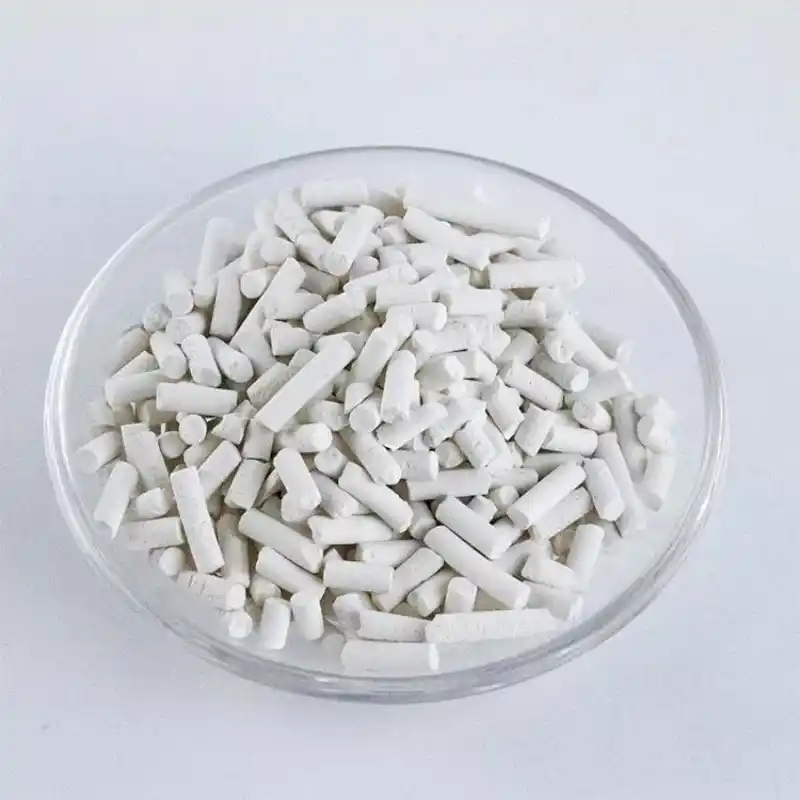
Zinc Oxide Desulfurization Manufacturer | Global Export

Choosing a zinc oxide desulfurizer is not simply a matter of comparing ZnO content. The wrong grade can lead to early sulfur breakthrough, rising pressure drop, shortened guard-bed cycles and premature deactivation of downstream catalysts.
As an industrial zinc oxide desulfurizer manufacturer, HONREL produces normal-temperature and high-temperature grades for natural gas, syngas, hydrogen, ammonia, petroleum refining and liquid hydrocarbon purification.
The product is made with active zinc oxide and selected components. Each grade is designed for a defined temperature range, pressure and sulfur-loading condition.
Table of Contents
What Is a Zinc Oxide Desulfurizer?
A zinc oxide desulfurizer is a reactive adsorbent used to remove hydrogen sulfide from industrial gas and liquid hydrocarbon streams.
The main reaction is:

Zinc oxide reacts with H₂S to form stable zinc sulfide and water. This is a chemical reaction rather than simple physical adsorption, which allows ZnO to achieve deep sulfur removal under suitable process conditions.
The material may also convert or absorb simpler organic sulfur compounds, including carbonyl sulfide and carbon disulfide:
Actual removal of COS, CS₂ and mercaptans depends on temperature, hydrogen content, gas composition and contact time. These compounds should be included in the feed analysis before selecting a grade.
Why Zinc Oxide Is Used as a Sulfur Guard
Zinc oxide is usually installed after bulk sulfur removal or sulfur hydrogenation. Its job is to catch the remaining sulfur before the gas reaches a sensitive catalytic process.
Common purposes include:
- Removing residual H₂S
- Controlling sulfur slip
- Protecting nickel, copper, iron and precious-metal catalysts
- Extending downstream catalyst cycles
- Maintaining stable conversion rates
- Reducing unplanned catalyst replacement
- Supporting consistent product quality
In a hydrogen, methanol or ammonia plant, the cost of premature catalyst poisoning can be much greater than the cost of maintaining the sulfur guard. A stable ZnO bed therefore has a direct impact on plant availability and operating cost.
Industrial Uses
Natural Gas Purification
Natural gas may contain H₂S, COS, mercaptans and other sulfur compounds. After primary acid-gas treatment, a zinc oxide bed can provide final polishing before steam reforming or chemical synthesis.
Removing sulfur at this stage helps protect the reformer catalyst and maintain a stable process temperature profile.
Hydrogen Production
Hydrocarbon feed used for hydrogen production must be cleaned before entering the steam reformer. Even low sulfur slip can reduce the activity of nickel-based reforming catalysts.
A zinc oxide sulfur guard is commonly used to remove the H₂S produced after upstream organic sulfur compounds have been hydrogenated.
Ammonia Synthesis
Natural gas and coal-derived syngas used in ammonia plants require deep purification before reforming, shift conversion and synthesis.
Zinc oxide helps control residual sulfur and protect the catalysts used throughout the process. Reliable sulfur pickup supports longer run lengths and fewer unscheduled shutdowns.
Methanol and Syngas Purification
Copper-based methanol synthesis catalysts are highly sensitive to sulfur. A ZnO guard bed can be installed in the feed purification train to reduce H₂S before the gas enters the synthesis loop.
Typical duties include:
- Methanol feed purification
- Coal syngas treatment
- Biomass syngas polishing
- Fischer–Tropsch feed protection
- Hydrogen-rich process gas cleaning
Petroleum Refining
Zinc oxide desulfurizers are used with refinery gas, naphtha, light hydrocarbons and other process streams. They can remove H₂S produced by upstream hydrodesulfurization and help protect reforming, hydrogenation and petrochemical catalysts.
Liquid Hydrocarbon Purification
Selected ZnO grades can be used for liquid hydrocarbons, propylene, naphtha and similar feedstocks. Liquid hourly space velocity, viscosity and contaminant profile must be considered separately from gas-phase service.
HONREL Zinc Oxide Desulfurizer Grades
HONREL supplies three main grades:
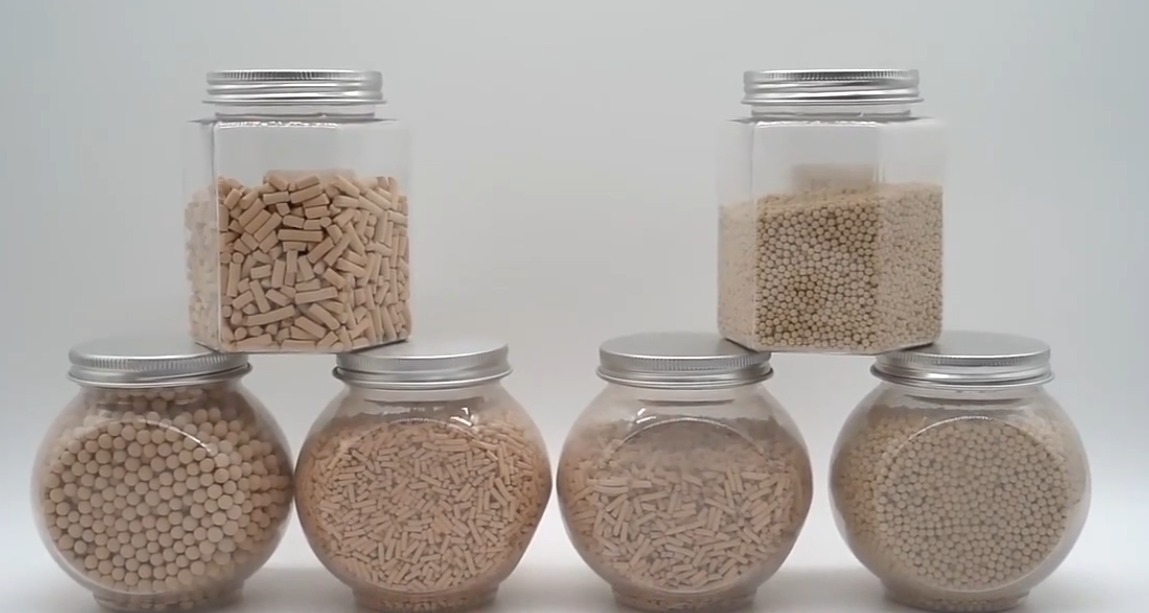
- HY306-G: high-temperature zinc oxide desulfurizer
- HY310-C: normal- and low-temperature zinc oxide desulfurizer
- T305: standard elevated-temperature zinc oxide desulfurizer
This model range allows plants to select a material according to the actual operating window instead of using one general-purpose grade for every process.
Product Specifications
| Property | Unit | HY306-G | HY310-C | T305 |
|---|---|---|---|---|
| Appearance | — | Light-yellow or white strips | Light-yellow or white strips | Light-yellow or white strips |
| Size | mm | φ3–5 × 5–15 | φ3–5 × 5–10 | φ3–5 × 5–15 |
| Density | kg/L | 1.0 ± 0.2 | 1.0 ± 0.2 | 1.0 ± 0.1 |
| Lateral compressive strength | N/cm | ≥60 | ≥60 | ≥40 |
| Abrasion rate | % | ≤5.0 | ≤5.0 | ≤6.0 |
| Breakthrough sulfur capacity | wt% | ≥20 at 220°C; ≥30 at 350°C | ≥10 at 30°C | ≥20 |
| ZnO and active components | % | ≥95 | ≥90 | ZnO ≥95 |
Recommended Process Conditions
| Condition | Unit | HY306-G | HY310-C | T305 |
|---|---|---|---|---|
| Operating pressure | MPa | 0–6.0 | <8.0 | 0–6.0 |
| Temperature | °C | 150–450 | 0–150 | 150–400 |
| Preferred temperature | °C | 300–400 | Process-dependent | 300–400 |
| Gas hourly space velocity | h⁻¹ | 1,000–3,000 | 1,000–3,000 | 1,000–3,000 |
| H₂S at outlet | ppm | <0.1 | <0.1 | <0.1 |
| Oxygen content | % | <0.5 | <0.5 | <0.5 |
The space velocity may be increased as the inlet H₂S concentration decreases. Outlet performance and service life depend on the complete gas composition and actual operating conditions.
How the Three Grades Differ
| Grade | Main operating window | Suitable duties |
|---|---|---|
| HY306-G | 150–450°C | High-temperature syngas, hydrogen, ammonia and refinery feed purification |
| HY310-C | 0–150°C | Normal- and low-temperature fine desulfurization |
| T305 | 150–400°C | Natural gas, refinery gas, syngas and liquid hydrocarbon treatment |
HY310-C should be considered where additional feed heating is impractical or where the gas enters the vessel near ambient temperature.
HY306-G and T305 are more suitable for elevated-temperature systems. Their preferred operating range of 300–400°C supports higher sulfur utilisation in many conventional ZnO guard-bed duties.
What Determines Actual Bed Life?
Breakthrough Sulfur Capacity
ZnO content alone does not show how much sulfur a bed will capture before reaching the outlet limit. Breakthrough sulfur capacity is more useful because it measures usable capacity under defined test conditions.
Temperature must always be stated with the sulfur-capacity value. A result measured at 350°C cannot be treated as the expected capacity at 30°C.
Inlet Sulfur Loading
Higher inlet H₂S consumes the active material faster. Total gas flow, H₂S concentration and required operating cycle determine the necessary loading quantity.
COS, CS₂ and mercaptans should be included because they may add to the total sulfur load.
Pellet Strength and Abrasion
Weak extrudates can break during transport, loading or operation. The resulting fines may cause:
- Increased differential pressure
- Gas channeling
- Uneven flow distribution
- Poor bed utilisation
- Early H₂S breakthrough
- Difficult unloading
Lateral compressive strength and abrasion rate are therefore important purchasing parameters, not just laboratory data.
Gas Hourly Space Velocity
High GHSV reduces the time available for the gas to contact the sorbent. If the bed is undersized, H₂S may break through even when unused ZnO remains inside the pellets.
Bed volume should be calculated from gas flow, sulfur loading, contact time and the required run length.
Water, CO₂ and Oxygen
Water vapour, CO₂ and oxygen can affect sulfur pickup and material stability. HONREL specifies an oxygen content below 0.5% for these products.
High-CO₂ streams, changing steam-to-gas ratios and possible condensation should be reviewed before loading. Condensed liquids can damage pellets, block pores and increase pressure drop.
Upstream Contaminants
Dust, tar, oil mist and heavy hydrocarbons can coat the pellet surface and restrict access to active ZnO. Suitable upstream filtration, separation and temperature control help protect the guard bed.
What to Expect from a Zinc Oxide Desulfurizer Manufacturer
A dependable supplier should provide more than a specification sheet. Technical support should cover:
- Grade selection
- Feed-gas review
- Sulfur-load calculation
- Recommended operating temperature
- Space-velocity guidance
- Loading quantity
- Storage and handling
- Batch documentation
- Packaging for international transport
Before recommending a product, the manufacturer should understand the customer’s process rather than treating every desulfurization unit as identical.
Information Required for Product Selection
Provide the following information when requesting a recommendation:
| Process information | Why it matters |
|---|---|
| Complete gas composition | Identifies H₂S, COS, CS₂, CO₂, oxygen and other contaminants |
| Inlet H₂S | Determines total sulfur loading |
| Required outlet sulfur | Defines the breakthrough target |
| Gas flow rate | Used to calculate bed volume and GHSV |
| Operating temperature | Determines the suitable grade |
| Operating pressure | Confirms process compatibility |
| Moisture or steam content | Helps assess water-vapour conditions |
| Vessel dimensions | Supports loading and pressure-drop evaluation |
| Target operating cycle | Helps estimate the required sorbent quantity |
Why Work with HONREL?
HONREL supplies zinc oxide grades for different temperature ranges rather than relying on one universal formulation. This allows the sulfur guard to be matched more closely to the process.
Customers can also browse HONREL’s complete range of industrial catalysts and desulfurization materials for gas purification, chemical processing and catalyst protection.
HONREL focuses on:
- Multiple ZnO grades
- Defined technical specifications
- Normal- and high-temperature options
- High mechanical strength
- Low abrasion
- Deep H₂S removal
- Export supply
- Process-based product selection
Conclusion
The right zinc oxide desulfurizer helps control sulfur slip, protect valuable downstream catalysts and extend plant operating cycles. Performance depends on more than ZnO percentage. Temperature, sulfur capacity, pellet strength, gas composition, GHSV and the required outlet specification must all be considered.
Explore the product range or contact us with your feed composition and operating conditions. HONREL can help identify a suitable grade and estimate the required loading for your desulfurization system.