
13X Molecular Sieve for Biogas Upgrading and CO₂ Removal

Buyers searching for 13X molecular sieve for biogas upgrading usually need one of two things: an adsorbent for a new CO₂ removal unit or a compatible replacement for an existing bed. HONREL supplies spherical and extruded 13X for bulk industrial orders, with defined adsorption, strength, attrition and particle size specifications.
For a replacement order, send the current product data sheet, particle size and previous loading quantity. HONREL can then compare the existing material with the available Molecular Sieve 13X grades instead of treating every 13X product as interchangeable.
Table of Contents
13X Molecular Sieve for Biogas Upgrading
Raw biogas contains methane and a large carbon dioxide fraction. Removing CO₂ raises the methane concentration and heating value, so downstream users can use the treated gas as biomethane for the intended application.
13X is a sodium form X zeolite with an effective pore opening of about 10 angstroms. It adsorbs carbon dioxide more strongly than methane under suitable conditions, which makes shaped 13X a practical adsorbent for CO₂ removal from pretreated biogas.
The word “pretreated” matters to the buyer. Water, hydrogen sulfide, siloxanes and heavy organic contaminants can occupy adsorption sites or shorten the useful life of the CO₂ bed. HONREL supplies the molecular sieve. The gas cleaning arrangement and operating cycle remain part of the customer’s upgrading equipment.
Published fixed bed research confirms that 13X can remove CO₂ from dried biogas. After researchers dried the gas, one study reported a CO₂ adsorption capacity of 78 mg/g at 25°C and 0.2 MPa. This is application evidence, not a guaranteed capacity for every plant. Actual performance changes with the feed, selected grade and equipment (source:https://www.mdpi.com/2227-9717/8/8/941).
HONREL 13X Forms and Specifications
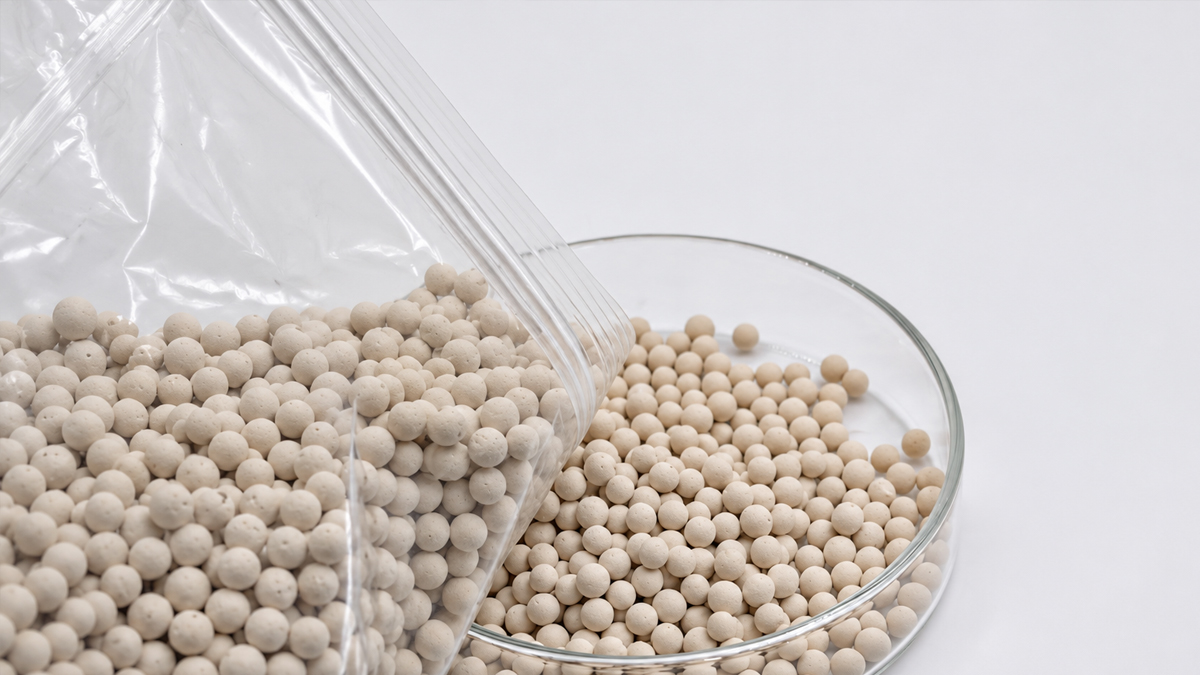
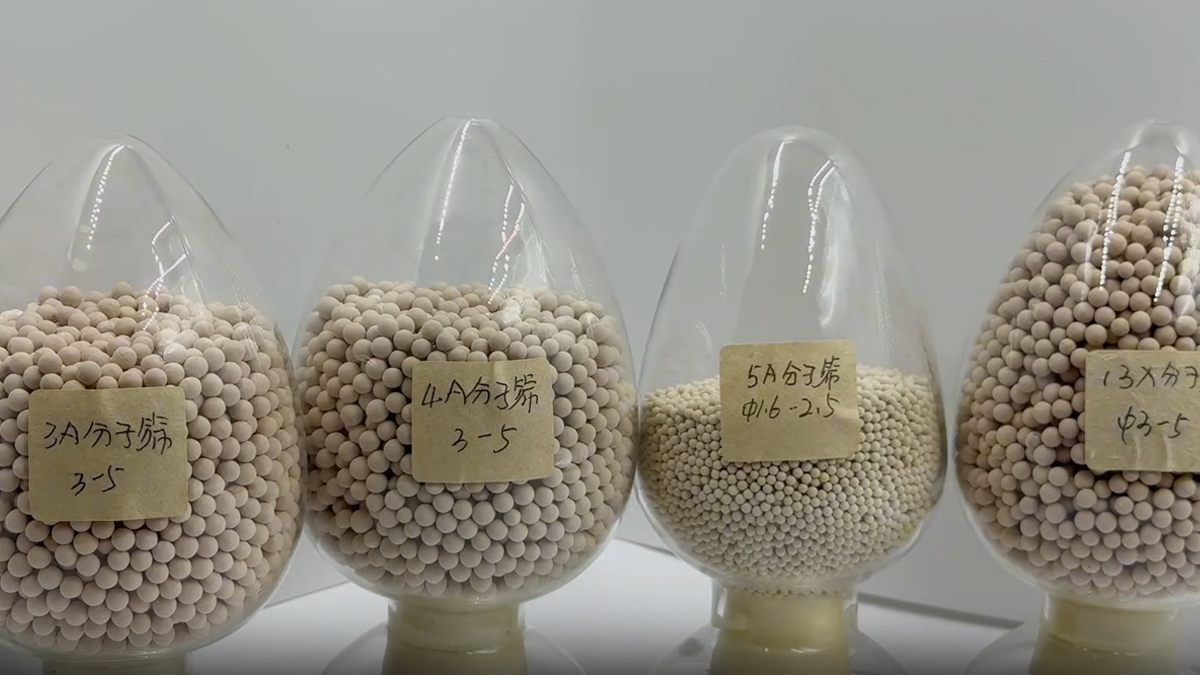
HONREL supplies spherical beads and cylindrical extrudates. Buyers can consider both forms for industrial adsorption vessels, but they should match the particle form and size that their equipment already uses whenever possible.
The following values are from HONREL’s current first class product specification.
| Product form and size | Static water adsorption | Static CO₂ adsorption at 25°C | Attrition rate | Crush strength | Loose bulk density |
|---|---|---|---|---|---|
| Spherical, 1.6 to 2.5 mm | ≥26.0 wt% | ≥18.5 wt% | ≤0.10% | ≥30 N/particle | ≥0.64 g/mL |
| Spherical, 3.0 to 5.0 mm | ≥26.0 wt% | ≥18.5 wt% | ≤0.10% | ≥85 N/particle | ≥0.64 g/mL |
| Extruded, 1.5 to 1.7 mm diameter | ≥26.0 wt% | ≥17.5 wt% | ≤0.10% | ≥30 N/strip | ≥0.61 g/mL |
| Extruded, 3.0 to 3.3 mm diameter | ≥26.0 wt% | ≥17.5 wt% | ≤0.20% | ≥45 N/strip | ≥0.61 g/mL |
The static water test uses 35°C, 75% relative humidity and a 24 hour test period. Compare another supplier’s CO₂ values only when the temperature, pressure and activation method are equivalent.
Which Particle Form Should You Order?
Use the current adsorbent as the first reference for a replacement project. Keep the existing particle form unless a verified specification supports changing between spherical material and extrudates.
Smaller particles generally provide faster adsorption but create more resistance to gas flow. Larger particles normally reduce pressure loss and have greater individual strength. The vessel and its commissioned particle range determine the correct choice.
If the equipment supplier specifies 1.6 to 2.5 mm beads, request that range. If the existing bed uses 3.0 to 3.3 mm extrudates, send the current specification to HONREL for a direct parameter comparison. This keeps the discussion focused on product compatibility rather than redesigning the unit.
Buyers evaluating cylindrical products can also review extruded 13X molecular sieve for industrial fixed beds.
What Biogas Buyers Should Compare Between Suppliers
The headline CO₂ number is only one purchase item. A useful supplier comparison also checks particle size compliance, bulk density, mechanical strength, attrition and moisture in the delivered package.
Particle size compliance shows whether most of the shipment falls inside the agreed range. Excess fines can increase bed pressure drop, while oversized material can change loading behaviour.
HONREL specifies at least 98% particle size compliance for first class spherical products and at least 95% rated length compliance for first class extrudates.
Crush strength and attrition measure different risks. Crush strength describes resistance to a compressive load. Attrition shows the tendency to create dust or small fragments during transport, loading and operation.
A buyer should request both rather than accept one as proof of the other.
Loose bulk density helps confirm how much material fits the available bed volume. Do not copy the previous order weight without checking the density of the proposed grade. A change in form, particle range or packing behaviour can change the required shipment quantity.
Replacing an Existing Biogas CO₂ Adsorbent
Replacement enquiries are usually more useful than a request that says only “send your 13X price.” The product must first match the installed bed.
Send HONREL the current TDS and most recent COA. Include the product form, particle range, quantity previously loaded, usable vessel volume and final bed height. Clear photographs of the old media and packaging labels can help when the original product name is unclear.
State the reason for replacement. Early CO₂ breakthrough, excessive dust, increasing pressure drop and routine scheduled replacement point to different product checks.
HONREL does not need to redesign the process to compare the material specification, but it does need enough information to avoid recommending the wrong form or size.
The 13X molecular sieve regeneration article helps buyers check moisture exposure and incomplete regeneration before ordering a replacement charge.
COA Requirements for a Bulk Order
A general TDS describes the product grade. The COA should identify the actual production batch in the shipment.
For 13X molecular sieve used in biogas upgrading and CO₂ removal, the purchasing specification should cover:
- Agreed particle form and size range
- Static water adsorption
- Static CO₂ adsorption and test temperature
- Loose bulk density
- Crush strength and strength variation
- Attrition rate
- Moisture as packed
- Batch number
Test conditions belong beside the result. Two suppliers may both state “CO₂ adsorption 18%” while using different temperatures or partial pressures. Check the method before treating those results as the same specification.
HONREL’s broader 13X molecular sieve manufacturer and supplier page covers the available forms, industrial applications and supporting documentation.
Packaging and Storage Before Loading
13X adsorbs moisture from ambient air. The value shown on the COA can be lost before startup if the packaging remains open in a humid loading area.
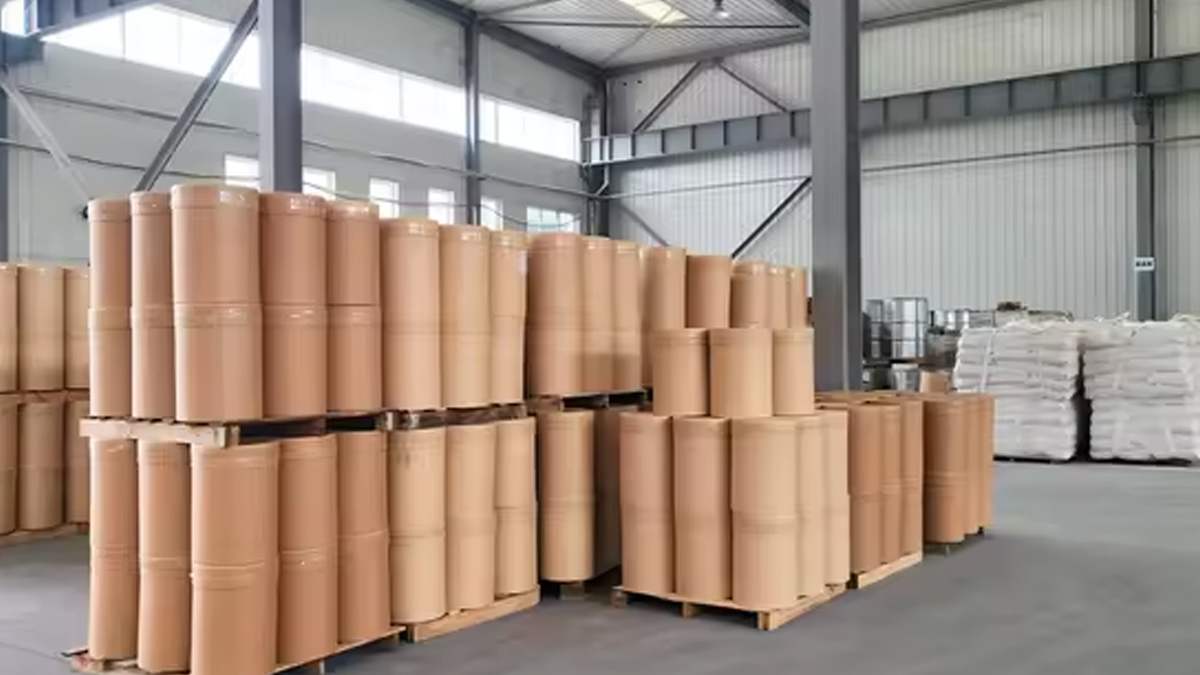
HONREL specifies no more than 1.5% moisture in the packaged spherical and extruded products. Keep the original package sealed until the vessel and loading equipment are ready.
Store the material in a dry, covered area. Protect the packaging from rain, punctures and contamination during transport and on-site storage.
For an international order, state the destination, required quantity and preferred packaging when requesting the quotation. Packaging must protect the molecular sieve from moisture throughout storage and shipment, not merely make the material easier to handle.
What to Include in Your RFQ to HONREL
A complete request for 13X molecular sieve for biogas upgrading should identify whether the project is a new installation or a replacement.
For replacement orders, attach the existing TDS and COA. If those documents are unavailable, provide clear photographs of the old adsorbent, package label and measured particle size.
The enquiry should include:
- Required spherical or extruded form
- Required particle size
- Bed volume
- Previous loading weight
- Estimated order quantity
- Destination
- Required delivery date
- Current product specification, if available
- Main contaminants present in the biogas
Also confirm that the gas receives moisture, hydrogen sulfide and siloxane control before entering the CO₂ adsorption bed.
Contact HONREL to request the current specification, batch documentation, sample availability and a bulk quotation. Sending the existing adsorbent information with the first message allows HONREL to compare products before preparing the supply proposal.